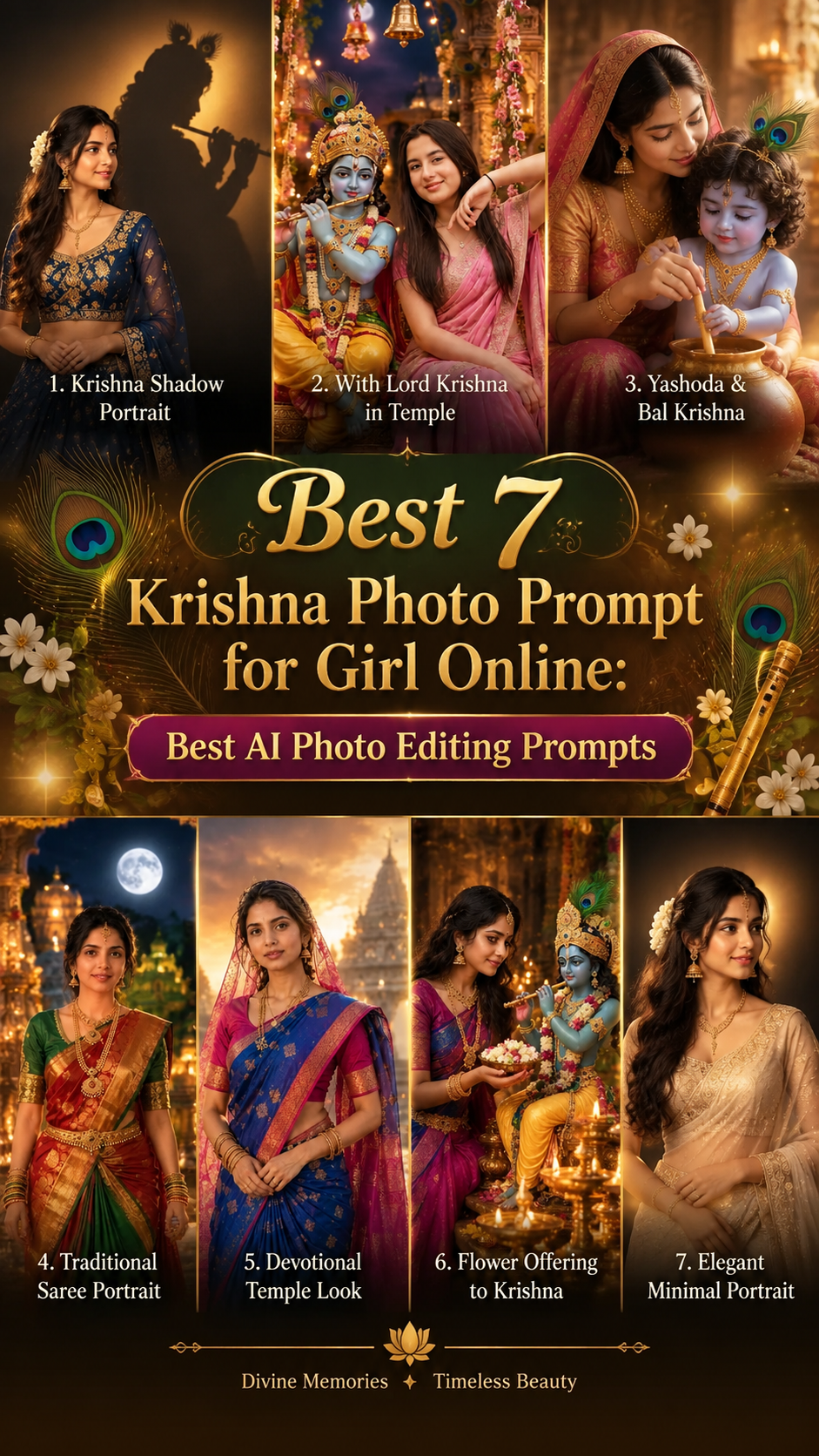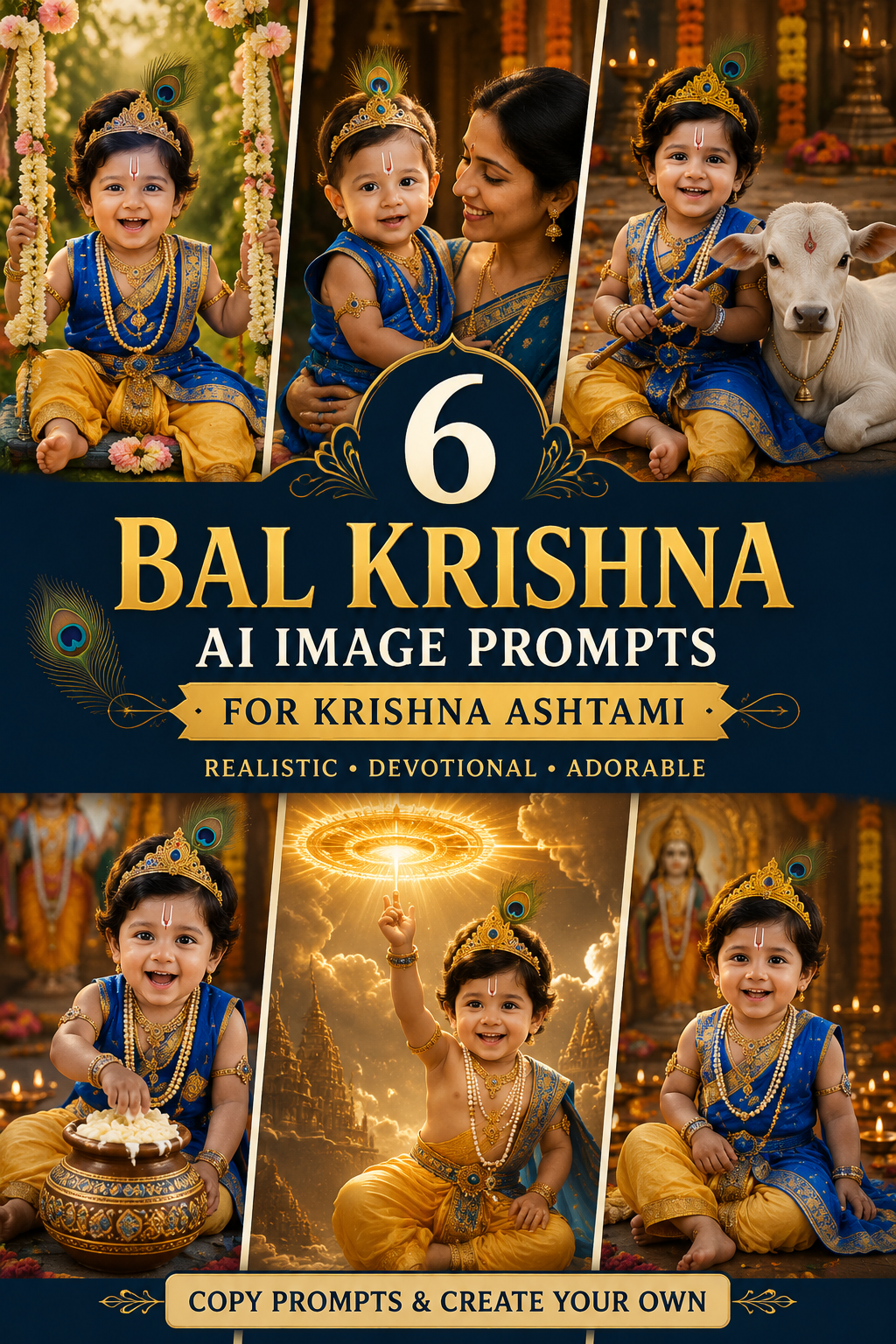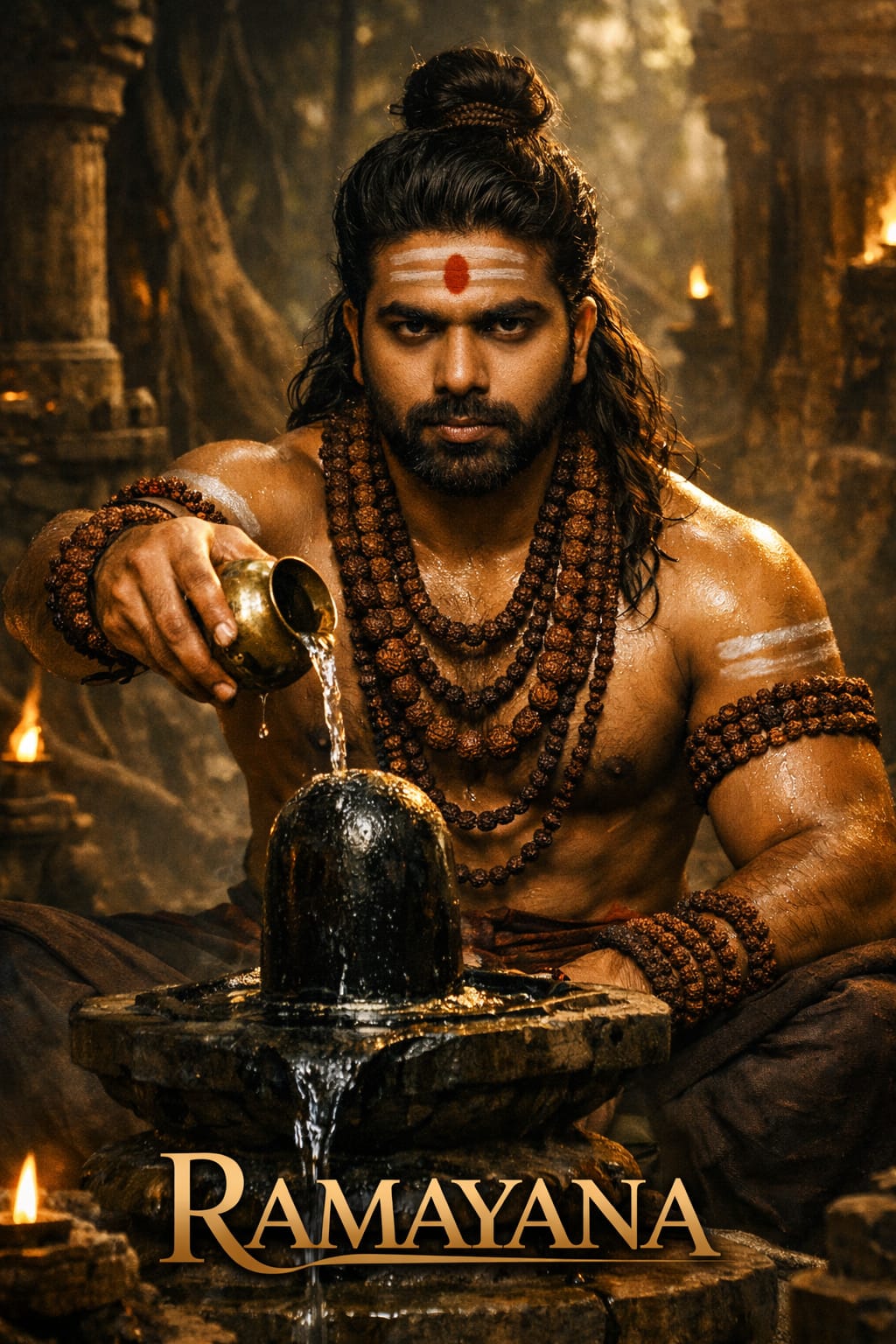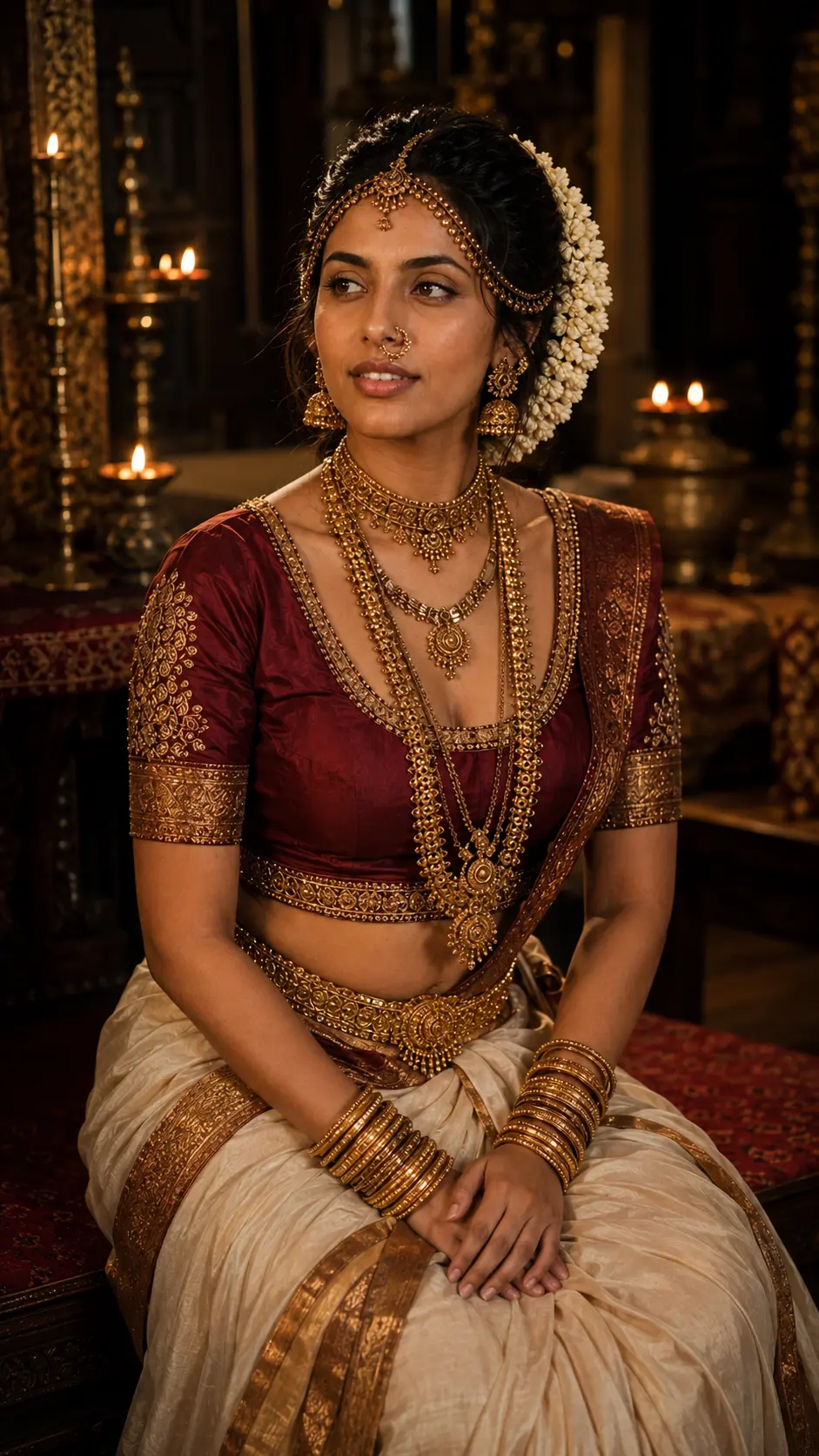
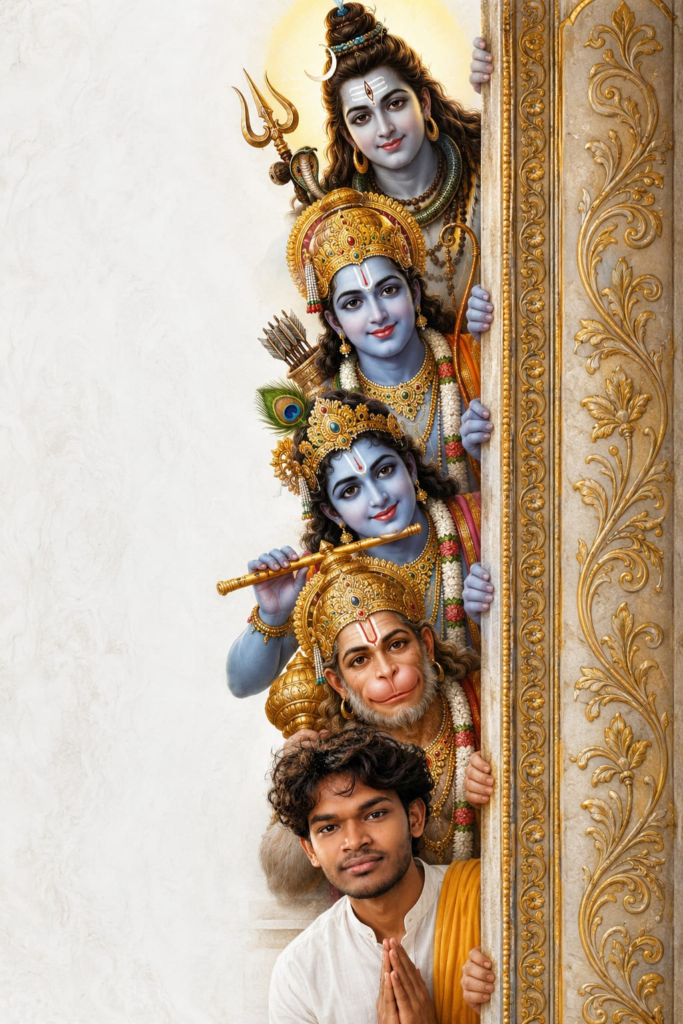
Ultra-detailed devotional digital artwork, Lord Shiva, Lord Rama, Lord Krishna, and Hanuman stacked vertically peeking from behind a decorative wall on the right side, smiling warmly with divine expressions, golden halos, intricate crowns, sacred ornaments, vibrant colors, highly detailed Indian spiritual illustration, clean white textured background, elegant temple art style, soft divine lighting, premium HD quality. At the bottom, a realistic young reference person seamlessly integrated into the composition, also peeking from behind the wall with folded hands and a gentle smile, matching the artistic style of the deities. Ultra-sharp details, realistic facial features from reference image, harmonious composition, devotional atmosphere, 4K masterpiece, vertical wallpaper format, Instagram viral artwork."
"Preserve exact facial identity of the reference person, accurate facial structure, eyes, hairstyle, skin tone, natural expression, highly realistic face integration while maintaining devotional illustration style." Make sure person should be in middle
About This AI Image Prompt
This AI image prompt is designed to create a highly detailed devotional artwork featuring Lord Shiva, Lord Rama, Lord Krishna, and Hanuman in a harmonious spiritual composition. The four divine figures are arranged vertically on the right side, appearing to peek warmly from behind a decorative wall with peaceful expressions, ornate crowns, sacred ornaments, and radiant golden halos.
The most important compositional change is the placement of the reference person. Instead of appearing at the bottom of the artwork, the person should be positioned prominently in the middle of the composition, directly integrated with the group. The person should also appear naturally from behind the decorative wall, with folded hands and a gentle devotional smile.
The reference photograph should guide the person’s facial identity, including facial structure, eyes, hairstyle, skin tone, and natural expression. The face should remain recognizable and realistically integrated while still harmonizing with the devotional artwork.
The white textured background keeps the composition clean and allows the colorful clothing, ornaments, halos, and spiritual details to stand out.
Understanding the Visual Style
The visual style combines Indian devotional artwork, temple-inspired illustration, spiritual portraiture, and realistic facial integration.
The deities are presented with vibrant colors, intricate crowns, sacred ornaments, and glowing halos, creating a traditional devotional atmosphere. Soft divine illumination gives the artwork a peaceful and reverent quality.
The reference person should not look disconnected from the artwork. Although the face should retain realistic facial characteristics, the lighting, colors, and edges should blend naturally with the surrounding devotional illustration.
The vertical arrangement creates a visual hierarchy while keeping the person clearly visible in the center rather than relegating the person to the bottom.
Technical Prompt Breakdown
The prompt emphasizes ultra-detailed rendering, realistic facial features, golden halos, intricate ornaments, clean composition, 4K quality, and vertical wallpaper formatting.
The reference person’s facial identity is a major technical priority. The face should preserve the recognizable structure of the uploaded reference, including the shape of the eyes, nose, lips, jawline, hairstyle, and skin tone.
The prompt does not specify a camera body, lens, aperture, ISO, or shutter speed, so those photographic specifications should not be invented. Instead, the visual quality depends on detailed illustration, accurate facial integration, lighting consistency, and high-resolution rendering.
The person should occupy the middle section of the composition, with the deities arranged around and above the person to maintain a balanced devotional hierarchy.
Lighting, Colors & Composition
Soft divine lighting should illuminate the deities and the reference person consistently. Golden halos provide warm highlights around the divine figures, while gentle illumination keeps the person’s face clearly visible.
The background remains predominantly white with subtle texture, allowing vibrant reds, blues, golds, saffron tones, and other traditional devotional colors to stand out.
The person should be positioned in the center, not at the bottom. The deities can remain vertically stacked toward the right and slightly behind the person, creating a layered composition.
The decorative wall provides a natural visual boundary between the figures and background. Folded hands and the gentle smile reinforce the devotional mood without making the pose feel exaggerated.
How to Customize This Prompt
Change the Person’s Position
The reference person can be placed slightly forward in the center, with the deities appearing behind and around them. Keeping the person centrally visible makes the artwork work particularly well as a devotional wallpaper or social-media portrait.
Change the Background
The white textured background can be replaced with a subtle temple interior, glowing golden backdrop, traditional Indian architectural wall, or soft celestial environment while preserving the devotional focus.
Change the Divine Arrangement
The four figures can remain vertically stacked or be arranged in a balanced semicircle around the central person. A semicircular arrangement can make the person feel more naturally integrated into the group.
Change the Artistic Treatment
The artwork can use traditional Indian temple-painting aesthetics, highly detailed digital illustration, realistic devotional artwork, or a softly painterly finish. The reference person’s face should remain recognizable regardless of the chosen style.
Change the Divine Lighting
The golden halos can be enhanced with soft rays, subtle atmospheric glow, or gentle warm illumination. Keeping the light direction consistent across every figure will make the composition feel more unified.
Best Use Cases
This concept works well for devotional wallpapers, spiritual artwork, Instagram posts, WhatsApp status images, personalized religious artwork, festive greetings, prayer-themed designs, digital portraits, and devotional social-media content. Because the artwork incorporates a person’s reference photograph alongside revered religious figures, it is best presented respectfully and with appropriate cultural sensitivity. For publication or commercial use, verify the rights associated with the reference photograph and any third-party artwork or assets used.