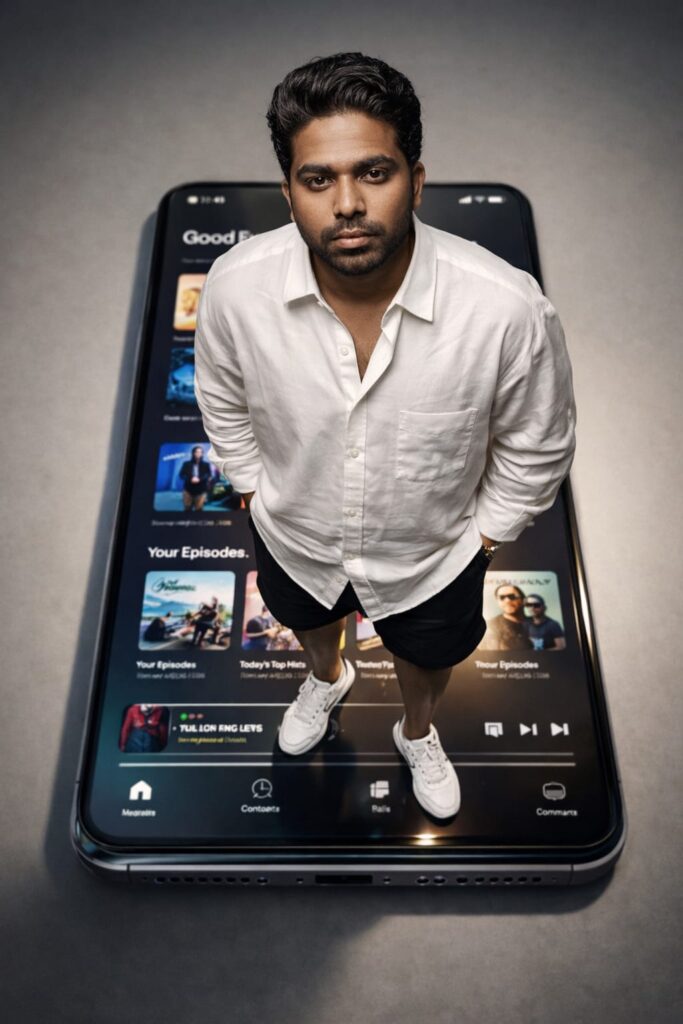
Ultra-realistic cinematic overhead shot of a confident South Asian man standing on top of a giant smartphone screen, viewed from above. The smartphone display shows a vibrant Spotify music interface with visible album artwork tiles, playlist sections, and playback controls. The man has dark wavy hair, a neatly trimmed beard, and a focused serious expression. He wears an oversized white shirt, black shorts, and clean sleek white sneakers, standing casually with both hands in his pockets. Minimal clean studio background, soft shadows, high-end editorial fashion photography look, sharp details in fabric texture and sneakers, realistic reflections on the phone glass surface, modern aesthetic, HDR realism, shallow depth of field, 8K, masterpiece, photorealistic, hyper-detailed, studio lighting.
This prompt creates a visually striking editorial concept by placing a fashion portrait directly onto the screen of an enormous smartphone. The overhead perspective makes the phone appear like a physical platform, while the man standing on its display creates an unusual combination of digital technology, fashion photography, and lifestyle branding.
The subject’s styling is intentionally simple. An oversized white shirt contrasts strongly with black shorts and clean white sneakers, creating a modern streetwear-inspired appearance. His serious expression and hands-in-pockets posture give the scene a calm, confident attitude rather than an energetic pose.
The smartphone display is an important storytelling element. The visible music interface, album artwork, playlists, and playback controls immediately communicate the connection between fashion and digital music culture. The enlarged screen also provides a strong graphic foundation beneath the subject.
Realistic reflections on the phone glass help connect the digital interface with the physical figure standing above it. The minimal studio environment keeps the composition clean and prevents unnecessary objects from competing with the main concept.
Understanding the Visual Style
The visual style combines conceptual fashion photography, luxury editorial portraiture, digital lifestyle imagery, and contemporary technology-inspired advertising.
The overhead viewpoint is the defining stylistic feature. Rather than photographing the subject from a conventional portrait angle, the camera looks downward and turns the smartphone into part of the physical environment.
The clean white shirt and minimal background create a modern aesthetic, while the colorful music interface provides visual contrast. This relationship between neutral fashion styling and a vivid digital screen gives the composition a polished advertising quality.
The overall concept feels contemporary because it combines a recognizable smartphone interface with a carefully styled fashion portrait.
Technical Prompt Breakdown
The prompt specifies an overhead camera viewpoint, shallow depth of field, studio lighting, HDR realism, 8K detail, and photorealistic rendering.
The overhead perspective is essential because the viewer needs to clearly see both the man and the smartphone display beneath him. The subject’s position should remain visually connected to the screen so that he appears to physically stand on the oversized device.
Realistic reflections on the phone glass are another important technical detail. They help integrate the subject’s shoes, clothing, and surrounding light with the glossy surface of the screen.
The prompt does not specify a particular camera body, lens, aperture, ISO, or shutter speed. Therefore, those specifications should not be invented. The main technical priorities are the overhead perspective, realistic materials, sharp subject details, and controlled depth of field.
Lighting, Colors & Composition
Soft studio lighting creates gentle shadows around the subject while maintaining clean visibility of the clothing and sneakers. The light should also produce believable reflections across the smartphone’s glass surface.
The color palette creates a strong contrast between the white and black outfit, clean studio background, and colorful music interface. The bright screen becomes an important secondary focal point beneath the subject.
The overhead composition allows the rectangular smartphone to act as a large graphic frame. The man’s body creates a strong human shape against the geometric display.
Keeping the surrounding studio minimal ensures that the smartphone and subject remain the dominant elements. Small reflections, shadows, and fabric details provide realism without cluttering the composition.
How to Customize This Prompt
Change the Music Interface
Replace the music-player display with another music-app-inspired interface, a custom playlist design, album artwork, or an abstract audio visualizer. A colorful interface creates stronger contrast against neutral clothing.
Change the Outfit
Replace the oversized white shirt with a black blazer, neutral hoodie, denim jacket, or minimalist streetwear. Keeping the clothing simple helps preserve the conceptual focus on the smartphone.
Adjust the Smartphone Design
Experiment with a modern edge-to-edge phone, transparent futuristic device, foldable phone, or oversized tablet. Different screen shapes can change the overall composition.
Modify the Pose
The hands-in-pockets stance creates relaxed confidence. You could instead have the subject looking down at the interface, holding headphones, adjusting his shirt, or taking a casual step across the screen.
Change the Background
A clean studio background can remain minimal, or you can introduce subtle shadows, soft gradients, or an abstract digital environment. Keeping the surrounding space uncluttered will preserve the premium editorial appearance.
Best Use Cases
This concept is suitable for technology advertising concepts, fashion campaigns, Pinterest content, social media posts, music-related branding, creative portfolios, digital marketing visuals, lifestyle editorials, and conceptual product campaigns. It is especially useful for projects that combine fashion with music or smartphone culture. If recognizable app interfaces, logos, album artwork, or other branded assets are used commercially, verify the relevant licensing and trademark requirements before publication.