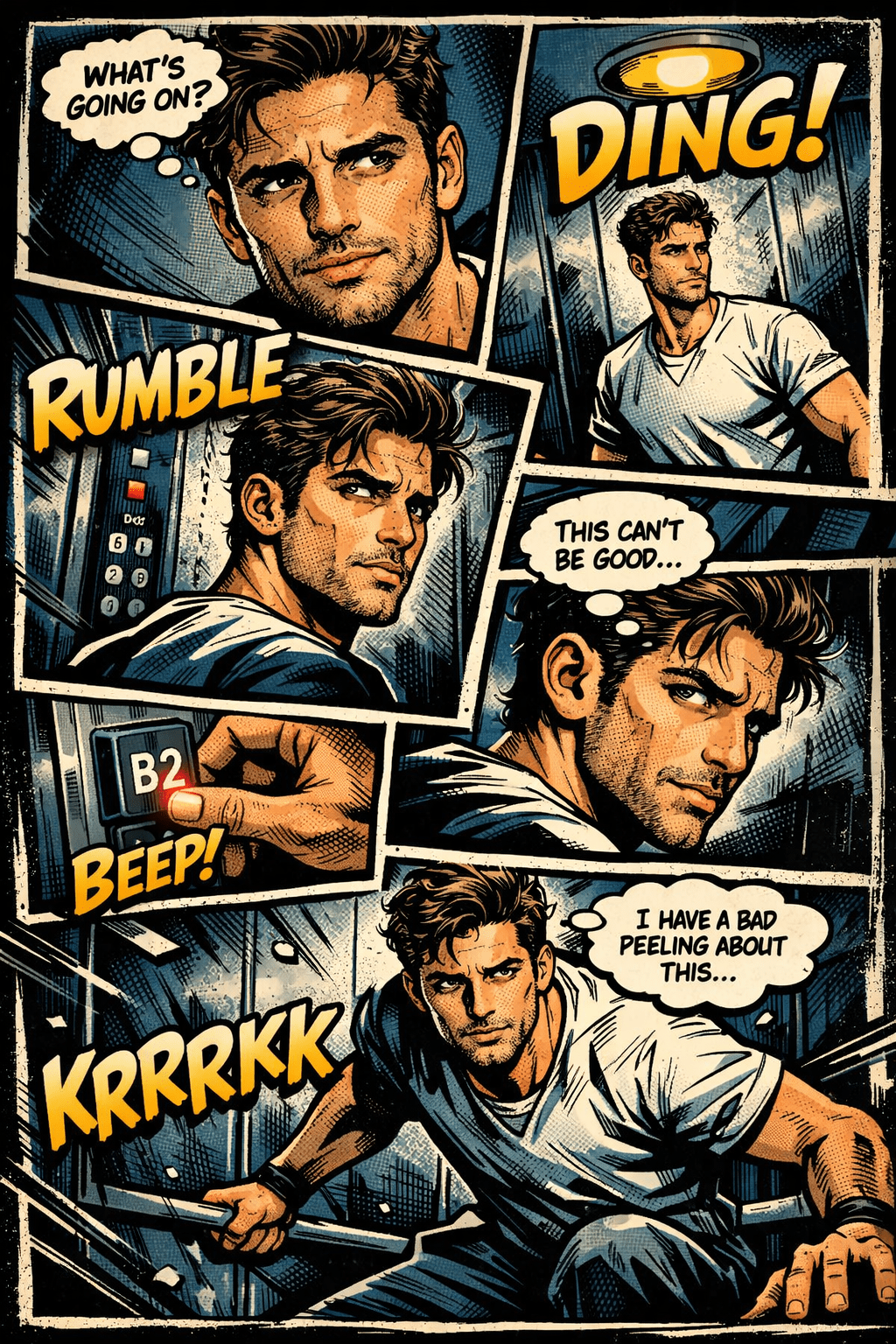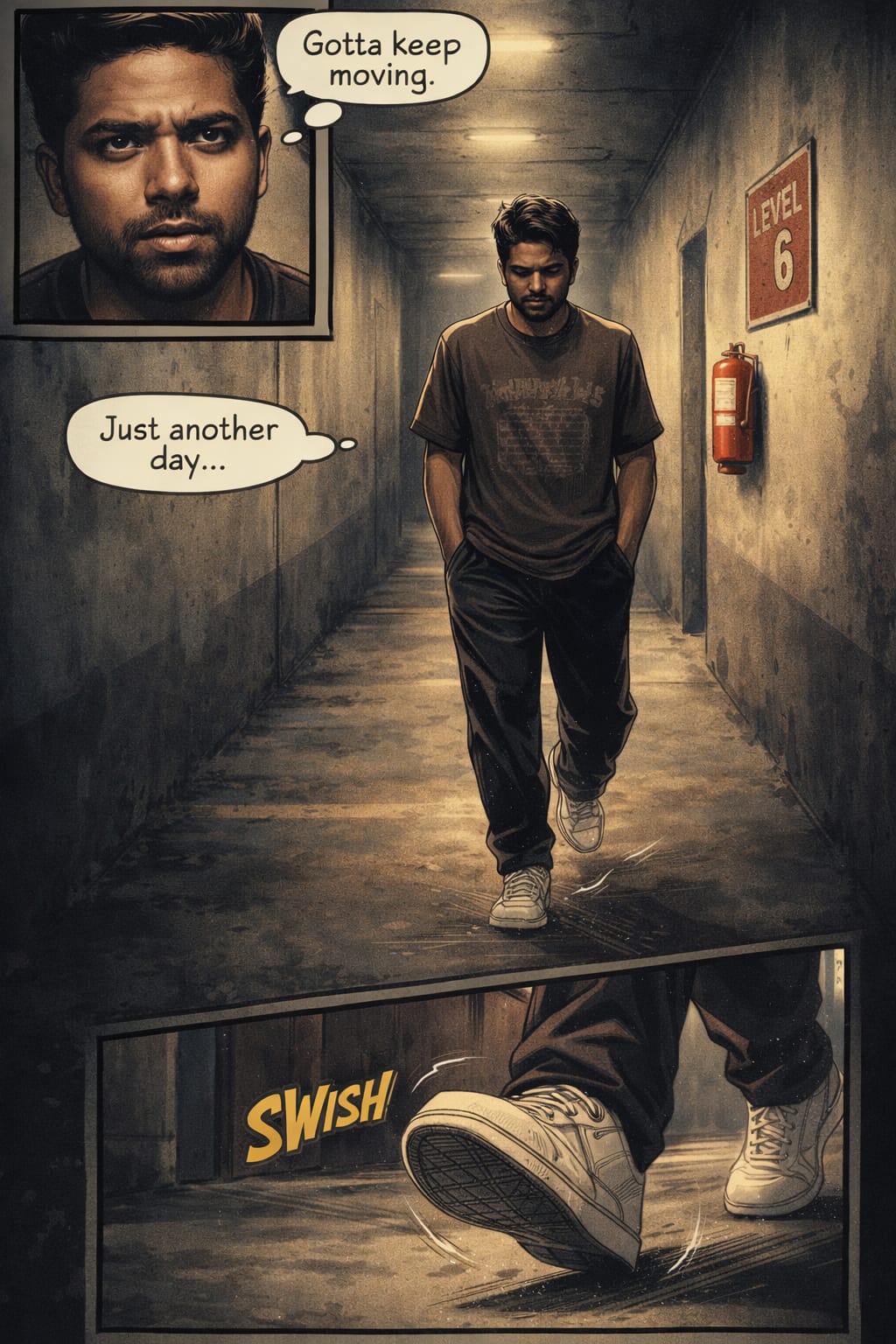
Say you have always wanted to write a choose-your-own-adventure story, the kind where the reader picks a path and the plot bends around their decision. Writing one by hand usually means mapping out dozens of branches, drawing or sourcing artwork for each scene, and somehow turning all of that into something people can actually click through. Most people with a good story idea never get past that first step.
StoryGames AI, a feature built into the Buildbox game creation platform, tries to close that gap. Instead of building a visual novel scene by scene, you describe your story idea, answer a short set of questions, and the AI puts together a working draft of the game for you, complete with chapters, artwork, and branching choices.

What StoryGames AI Actually Does
StoryGames AI is not a general purpose writing assistant. It is built specifically for one kind of output: interactive, chapter-based visual novels, the same style of game where the story unfolds through dialogue, artwork, and choices rather than fast-paced action.
You start by describing the kind of story you want. The system then asks a handful of guided questions, covering things like your main character, the central conflict, and the tone of the world you are building. You can answer every question in detail, or skip some and let the AI fill in the gaps with its own creative decisions.
Once you have given it enough to work with, StoryGames AI generates a full first draft. According to Buildbox, this typically includes around ten chapters, AI generated artwork for scenes and characters, and a set of interactive choices that steer the player toward different outcomes. Depending on how you set up the story, it can also include extra game elements like a health system, in-game currency, background music, and multiple possible endings.
The First Draft Is a Starting Point, Not the Final Game
This is the part that is easy to misunderstand. The moment StoryGames AI finishes generating your project, it can feel like the hard work is done. In practice, the generated version is closer to a rough cut than a finished product.
Think of it the way a film director thinks about a first edit of a movie. The scenes exist, the story has a shape, but a lot of the details still need attention: dialogue that sounds slightly off, pacing that drags in places, or a character who needs a stronger personality. The same is true here. You will likely want to rewrite certain lines of dialogue, swap out an image that does not match your vision, adjust how quickly the story moves, or add entirely new chapters once the original draft gives you a clearer sense of where the story should go.
The tool’s real value shows up in this second stage, where AI-generated speed meets your own editing and judgment.
If you are curious how AI systems like this make creative decisions on their own, this explainer on AI Agents for Beginners breaks down the underlying concept in plain terms.
What Kinds of Stories Work Well

StoryGames AI is not limited to a single genre. Buildbox has pointed to genres like fantasy, detective fiction, romance, and science fiction as strong fits, but the format works for a wide range of ideas, including:
- Mystery and detective stories built around clues the player uncovers
- Romance stories where relationships shift based on player choices
- Horror and survival scenarios where the wrong decision has consequences
- Historical fiction set in a specific time period
- Educational storytelling, where choices teach a concept along the way
The quality of the output tends to track the quality of the input. A vague one-line idea gives the AI very little to work with, while a detailed concept, one that explains the setting, the main character’s goal, and what stands in their way, tends to produce a far more coherent first draft.
How the Branching Choices Work
The feature that separates a visual novel from a regular story is the branching structure. Instead of reading a fixed sequence of events, the player makes decisions that change what happens next.
Picture a scene where a character finds themselves outside a locked storage unit late at night. One choice might be to pick the lock and go inside, while another might be to walk away and come back with help during the day. Each path leads to a different set of scenes, and eventually, a different ending.
Buildbox’s editor lets creators adjust where each choice leads, meaning you are not stuck with whatever branching the AI generated initially. You can redirect a choice toward a different chapter entirely, merge two paths back together, or create a new branch that did not exist in the first draft. The more intentionally these choices are designed, the more it feels like the player’s decisions actually matter, rather than every path quietly leading to the same place.
Building on Mobile
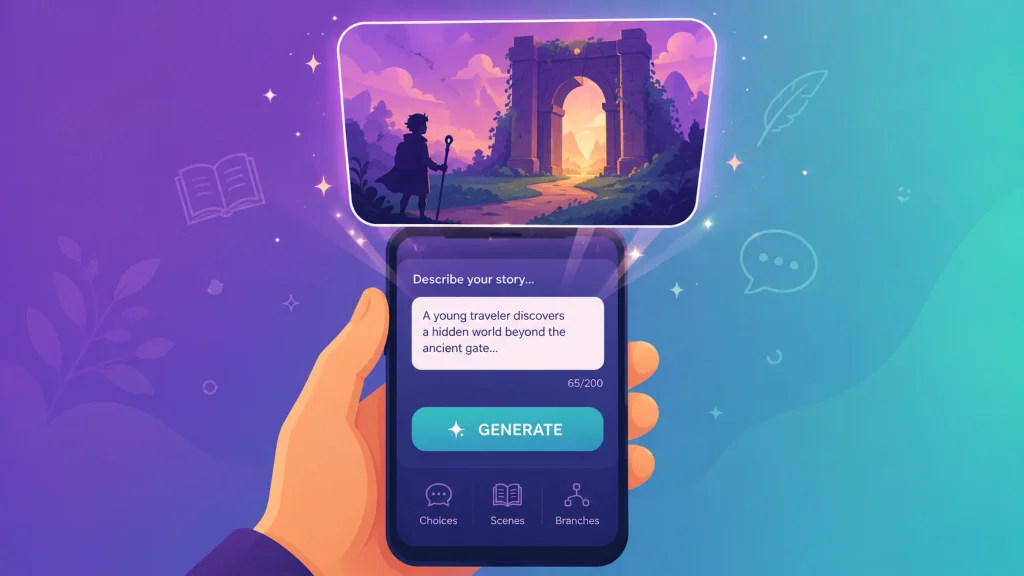
StoryGames AI is also built into Buildbox World, the platform’s Android app, which means you do not need a desktop computer to start a project. From a phone, you can describe a story, generate it, preview how it plays, and share it with others through Buildbox World directly.
This matters more than it might seem at first. A lot of creative ideas show up at inconvenient times, on a commute or during a break, when opening a laptop is not realistic. Being able to sketch out a story idea and see a working draft from a phone lowers the barrier for casual creators who might never sit down to build something otherwise.
Feature availability can shift as any app gets updated, so it is worth checking Buildbox’s own documentation for the current state of mobile support before relying on older details.
Is StoryGames AI Actually Worth Using
The honest answer depends on what you are hoping to get out of it. If the goal is a fully polished, commercial-quality game with zero additional effort, that is not a realistic expectation for any AI generation tool available right now, including this one.
Where it does perform well is as a starting point. If you have a story idea sitting in your head and no clear way to turn it into something interactive, StoryGames AI gives you a working draft in a fraction of the time it would take to build one from scratch. From there, the project becomes a foundation you shape rather than a blank page you are staring at.
A useful way to think about it: the AI can hand you a house with the walls and rooms already in place. Whether it feels like a home depends on what you do with the furniture, the paint, and the small details after that.
For a look at how this compares to no-code tools used for building apps rather than games, this guide on the best vibe coding tools covers a related but different category of AI-assisted creation.
Tips for Getting a Better First Draft
A handful of habits tend to produce noticeably better results:
- Describe your main character’s goal and what is stopping them, not just a general setting
- Give the central conflict a reason for the player to care about the outcome
- Make sure each choice leads somewhere meaningfully different, not just a slightly reworded version of the same scene
- Read through the generated dialogue carefully and rewrite anything that feels flat or repetitive
- Treat the first draft as raw material, not a finished script
Frequently Asked Questions
Do I need any coding experience to use StoryGames AI? No. It is designed for creators with no programming background. You describe your story in plain language, and the tool generates the interactive game structure for you.
How many chapters does StoryGames AI typically generate? Buildbox states that a generated StoryGame commonly includes around ten chapters, though this can vary depending on the story and settings you provide.
Can I edit the story after it is generated? Yes. The generated project is meant to be edited. You can rewrite dialogue, swap out artwork, redirect choices, and add new chapters using Buildbox’s editor.
Is StoryGames AI available on mobile devices? It is available through Buildbox World on Android, allowing creators to build, preview, and share stories directly from a phone.
What genres work best with StoryGames AI? Buildbox has highlighted fantasy, detective, romance, and science fiction as strong genres, though the tool can be used for mystery, horror, historical, and educational stories as well.
Will StoryGames AI create a finished, ready-to-publish game? Not on its own. The generated draft gives you a working starting point, but most creators still edit dialogue, artwork, and pacing before considering the project finished.
Conclusion
StoryGames AI does not replace the creative work of writing a genuinely engaging story, and it was never really designed to. What it removes is the intimidating first step of turning an idea into something structured and playable. If you have a story you have always wanted to build into an interactive experience, using AI to generate the first draft and then shaping it into something that feels like your own work is a reasonable way to get started, without needing years of game development experience first.
Note: features, pricing, and platform availability for StoryGames AI are part of the actively developed Buildbox ecosystem and may change over time. Check Buildbox’s current documentation before making decisions based on older details.