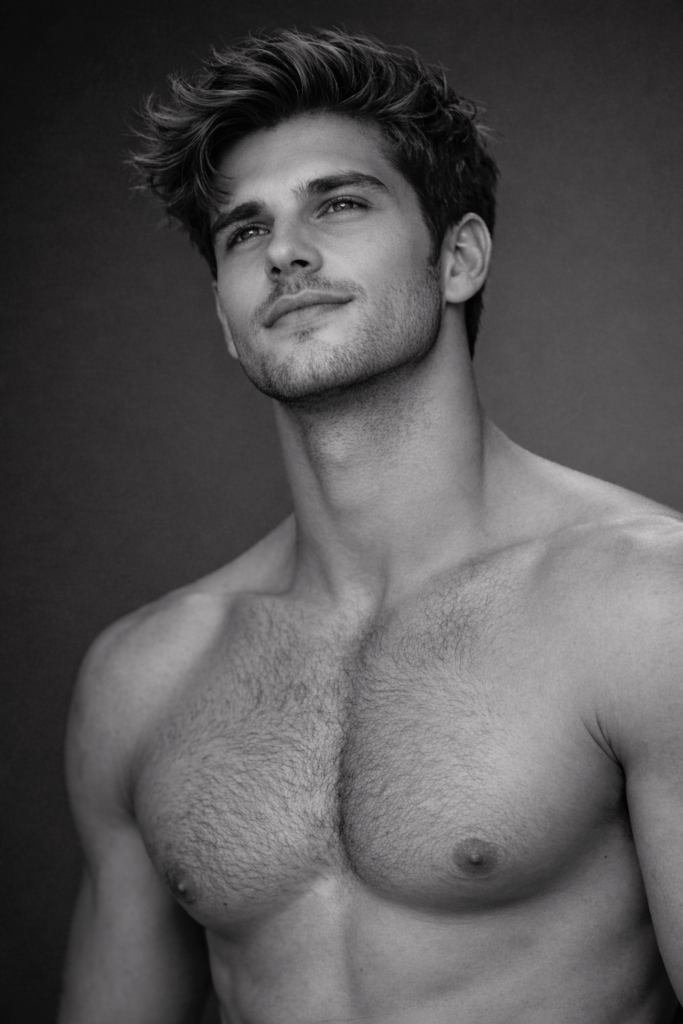
Transform the subject to match the exact pose, attitude, and composition of the first reference image: shirtless male portrait, upper body visible, head tilted slightly upward, eyes looking above the camera, calm and confident masculine attitude, relaxed jaw, neutral lips, no smile. Maintain the same body posture, neck angle, shoulder alignment, and chest framing as the first image. Convert the image to high-contrast black and white, studio-style lighting with soft directional light from the side creating gentle shadows on the face, neck, and chest. Background must be a plain dark gradient studio backdrop. Preserve realistic skin texture, natural pores, light stubble, and subtle chest hair. Do NOT beautify, stylize, or exaggerate features. The result must look like a professional editorial studio portrait, ultra-realistic, DSLR quality, sharp focus, natural contrast — no AI look, no cartoon effect, no plastic skin. Keep everything photorealistic and cinematic, matching the first image exactly in mood, pose, and attitude.
About This AI Image Prompt
This prompt is designed to create a refined black-and-white editorial portrait focused on masculine presence, controlled expression, and precise pose matching. Rather than introducing a complicated environment or elaborate styling, the concept relies on the subject’s posture, facial direction, body framing, and lighting to create visual impact.
The subject is shown shirtless with the upper body visible, allowing natural skin texture, light stubble, and subtle chest hair to contribute to the realism of the portrait. His head is tilted slightly upward while his eyes look above the camera, creating a quiet sense of confidence and contemplation.
Pose consistency is one of the most important elements. The prompt specifically emphasizes the neck angle, shoulder alignment, chest framing, and overall body posture so the composition closely follows the first reference image.
The black-and-white treatment removes distracting color and places greater emphasis on facial structure, shadows, skin texture, and body contours. A dark gradient studio background keeps the environment minimal, ensuring that the expression and silhouette remain the primary visual focus.
Understanding the Visual Style
The visual style combines high-fashion editorial portraiture, monochrome studio photography, and cinematic realism. Its simplicity gives the image a polished professional character without relying on decorative elements.
High-contrast black-and-white treatment creates a timeless appearance. Instead of clothing colors or environmental details directing attention, the viewer focuses on the face, posture, shoulders, and natural skin texture.
The dark studio backdrop reinforces the dramatic editorial mood while providing separation around the subject’s upper body. Soft directional light prevents the image from becoming excessively harsh, allowing subtle facial and skin details to remain visible.
The overall aesthetic is restrained and sophisticated, with confidence communicated primarily through posture and gaze rather than an exaggerated expression.
Technical Prompt Breakdown
The prompt focuses heavily on pose replication and composition matching rather than specifying a particular camera setup. The upper-body framing, head angle, shoulder alignment, neck position, and chest placement are all important structural instructions.
The lighting is described as studio-style, with soft directional illumination coming from the side. This creates gradual transitions between highlights and shadows across the face, neck, and chest.
The prompt requests sharp focus and DSLR-quality realism but does not specify a particular camera body, lens, aperture, ISO, or shutter speed. Those details should therefore remain open.
Natural pores, light stubble, and subtle chest hair are specifically included to maintain believable surface detail. The instruction against plastic skin and beautification reinforces the goal of retaining natural imperfections rather than producing an overly polished appearance.
Lighting, Colors & Composition
The portrait uses a high-contrast monochrome palette, making the relationship between light and shadow central to the image. Side lighting creates gentle modeling across the face and upper body, helping define the jaw, neck, shoulders, and chest without making the shadows excessively dramatic.
The dark gradient background provides a controlled studio environment and prevents visual distractions. Its gradual tonal transition can create depth while remaining understated.
The subject’s upward gaze establishes the main directional element of the composition. Because the eyes are positioned above the camera rather than directly toward it, the portrait feels thoughtful and composed.
The upper-body framing ensures the viewer remains focused on the facial expression and posture. The absence of clothing also keeps the visual emphasis on natural anatomy, texture, and lighting rather than fashion styling.
How to Customize This Prompt
Change the Gaze Direction
Keep the same upward head position but direct the eyes slightly farther into the distance or closer toward the camera. A more distant gaze can create a contemplative mood, while a stronger forward gaze can make the portrait feel more assertive.
Adjust the Lighting
Use softer side lighting for a gentler editorial portrait or stronger directional lighting for deeper facial shadows. A subtle rim light can also separate the shoulders from the dark background.
Change the Background
The plain dark gradient can be replaced with charcoal grey, a textured studio wall, or a completely black background. Keeping the background minimal will preserve the portrait-focused composition.
Modify the Expression
The neutral expression can remain completely controlled, or the relaxed jaw can be combined with a slightly more intense gaze. Avoiding exaggerated expressions preserves the sophisticated editorial character.
Adjust the Framing
A slightly wider crop can reveal more of the chest and shoulders, while a tighter crop can emphasize the eyes, facial structure, and skin texture. The framing should remain consistent with the intended reference composition.
Best Use Cases
This portrait concept can work well for men’s fashion editorials, fitness and lifestyle branding, magazine-style photography, Pinterest content, social media portraits, creative portfolios, grooming campaigns, personal branding, and monochrome photography projects. Its minimal studio setting also makes it adaptable to premium editorial layouts. For commercial use, check the AI generator’s licensing terms and ensure the reference image and any additional third-party assets are authorized for your intended use.