Create an ultra-realistic cinematic portrait of a young South Asian man sitting alone at a wooden study table late at night. He is wearing a simple dark charcoal sweatshirt, with a natural hairstyle and realistic facial features. His posture is calm and thoughtful, with both hands naturally resting on the table near an open book. His head is slightly tilted upward, and his eyes are looking toward the space above him with a thoughtful, hopeful expression.

On the study table, place an open textbook, several slightly messy stacks of books, handwritten notes, loose papers, a pen, and a simple black desk lamp. The lamp provides a soft, warm medium-intensity light that naturally illuminates his face, hands, books, and part of the wooden desk. Keep the rest of the room darker with realistic ambient shadows. The environment should feel like a real student's small bedroom or study room, not a fantasy set.

Above and slightly behind the young man, create a subtle dreamlike vision floating naturally in the air, blending realistically into the surrounding atmosphere. The vision should look like memories and future dreams appearing through soft translucent clouds, gentle mist, and cinematic light—not like separate pasted images.

Inside the floating vision, show symbolic moments from his future and struggles: a tired young man studying alone late at night, difficult roads and obstacles representing struggle, a graduation moment representing achievement, a confident successful version of himself wearing a formal suit standing in a modern city, a distant city skyline representing ambition, and a peaceful moment with his family representing the reason behind his journey. Make every vision element slightly transparent, atmospheric, and naturally integrated into the clouds.

The main subject must remain the strongest and sharpest element of the image, while the future visions gradually fade into the surrounding mist. Create a powerful visual contrast between his present struggle at the study table and the hopeful future he imagines above him.

Natural human anatomy, realistic skin pores, subtle facial imperfections, authentic hair texture, realistic hands and fingers, physically accurate lighting, natural shadows, realistic fabric texture, realistic wooden desk and books, believable indoor environment, no artificial plastic skin.

Shot as a professional cinematic photograph on a Sony A7R IV with an 85mm lens at f/1.8, shallow depth of field, realistic bokeh, soft cinematic lighting, subtle volumetric light, natural color grading, deep but realistic shadows, gentle warm highlights, restrained contrast, fine film grain, HDR, extremely detailed, photorealistic, emotionally powerful, documentary-style realism, 8K UHD quality.

Composition: vertical 4:5 portrait, medium-full shot, eye-level camera with enough space above the subject for the floating future vision, balanced composition, realistic perspective, cinematic depth, no exaggerated fantasy effects, no cartoon appearance, no illustration, no CGI look, no over-saturated colors, no excessive glow, no distorted anatomy.
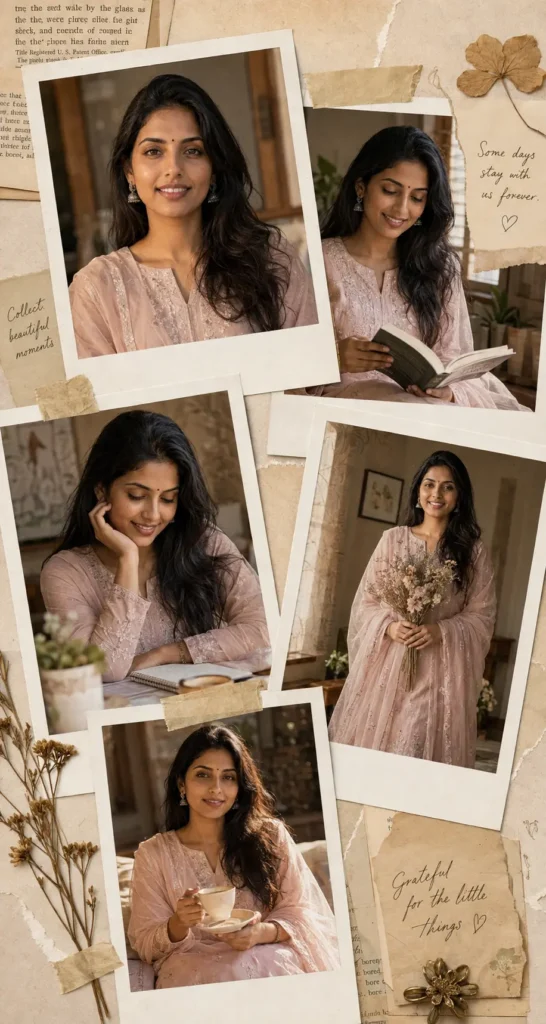
There is something instantly personal about a scrapbook filled with photographs, handwritten notes, little memories, and imperfect paper details. A vintage scrapbook photo collage brings that feeling into a single AI-generated image, combining several portrait moments into one carefully arranged keepsake. It works especially well for anyone who wants an old-photo aesthetic without losing the realistic appearance of the person featured in the pictures.
The Look: Nostalgic, Personal, and Photographic
The visual direction leans toward an authentic handmade scrapbook rather than a perfectly polished digital collage. Multiple photographs appear layered across aged paper, with slightly uneven edges, soft paper textures, subtle tape marks, handwritten-style notes, and small decorative elements adding character.
The photographs themselves should feel like genuine camera captures. Warm skin tones, natural expressions, believable hair texture, and mild film grain help the individual images blend naturally with the vintage surroundings. A muted palette of faded cream, dusty beige, warm brown, soft blush, and slightly desaturated colors gives the finished piece the character of an old family memory album.
Rather than making every photograph identical, the collage benefits from different moments—close portraits, casual poses, and slightly varied angles. That variation makes the page feel assembled from real memories instead of duplicated AI renders.
Three Details That Make the Collage Work
Layered paper depth: The scrapbook shouldn’t look completely flat. Overlapping photographs, curled paper corners, thin shadows, washi-tape-like strips, and tiny imperfections create the impression that physical photographs were arranged by hand.
Soft vintage photography: The individual photos work best with gentle daylight or warm indoor illumination rather than dramatic cinematic lighting. Slight grain, restrained contrast, and subtle fading help the photographs belong to the same nostalgic visual world.
Natural variation between frames: Keeping the person’s identity consistent while changing facial expressions, poses, and framing is important. One frame might feel like a candid snapshot, while another resembles a carefully taken portrait. This gives the collage a believable storytelling quality.
Personalize the Memory Page
You can make the result much more meaningful by building the collage around a particular theme. For example, a birthday version could include tiny paper birthday notes and a handwritten date, while a travel-inspired page could feature miniature ticket stubs, destination labels, pressed-leaf details, or small map fragments.
Another interesting approach is creating a “then and now” scrapbook. Use older-looking photographs on one side and cleaner modern portraits on the other, connected by handwritten dates. For couples or close friends, small captions describing shared moments can make the page feel like a genuine memory board rather than a decorative image.
If you’re creating it for social media, a vertical scrapbook layout works particularly well. Leave enough breathing room around the photographs so the page remains readable when cropped for an Instagram Story, Pinterest pin, or mobile wallpaper.
Where This Style Fits Best
This vintage collage style is particularly useful for Instagram memory posts, birthday and anniversary designs, personalized digital keepsakes, Pinterest mood boards, and nostalgic profile or cover artwork. It can also work as a visual concept for a personal photo journal or a themed AI photography portfolio.
My Test With the Prompt
I tested this style with an image generator and found that keeping the scrapbook decorations slightly understated produced more convincing results. One small change made a noticeable difference: I asked for natural paper imperfections instead of perfectly clean vintage textures. I also found that adding too many handwritten words often caused distorted lettering, so I kept the text minimal and let the photographs carry most of the story.