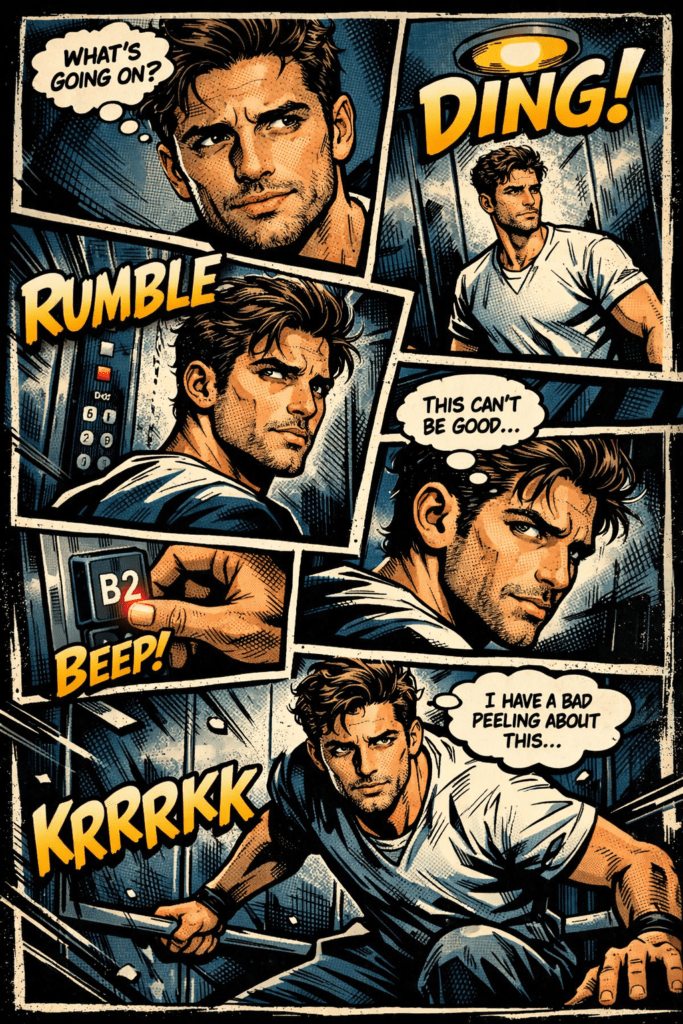
Create a cinematic comic-book style illustration inspired by the reference image, depicting a man inside an elevator environment, presented through multiple dynamic panels and angles. The artwork should feature bold black ink outlines, dramatic high-contrast lighting, and a restricted color palette dominated by deep blues, cool grays, natural skin tones, and bright yellow accents used for sound effects and visual emphasis. The face should be rendered using halftone dots, cross-hatching, and textured comic shading, giving it a gritty modern graphic-novel aesthetic. Incorporate comic sound words such as “DING!” and “RUMBLE” in bold, stylized typography, along with speech bubbles and thought bubbles to suggest inner dialogue and tension. The composition must feel energetic and cinematic, using diagonal lines, layered panels, perspective shifts, and motion cues, while avoiding photorealism and soft gradients. The final artwork should resemble a high-impact contemporary graphic novel page, expressive, dramatic, and story-driven, suitable for a cinematic illustrated narrative.
This AI image prompt creates a cinematic contemporary comic-book page inspired by the reference image, placing the man inside an elevator and presenting the scene through multiple dynamic panels and camera angles.
The concept focuses on tension, movement, inner thoughts, and cinematic storytelling rather than photorealism. The character’s recognizable appearance should remain consistent throughout every panel.
Understanding the Visual Style
The visual style combines modern graphic-novel illustration, cinematic comic panels, bold ink drawing, halftone printing, cross-hatching, and dramatic storytelling.
Heavy black outlines define the character and elevator environment, while textured comic shading gives the artwork a gritty, hand-illustrated appearance.
The restricted palette of deep blues, cool grays, natural skin tones, and bright yellow accents keeps the page visually cohesive.
Dynamic Panel Composition
Main Panel — Elevator Interior
Show the man standing inside the elevator from a dramatic perspective.
The elevator walls, doors, control panel, ceiling lights, and reflective metallic surfaces should establish the enclosed environment.
His expression should communicate quiet tension and concentration.
Secondary Panel — Close-Up
Use a tighter close-up of his face with halftone dots, cross-hatching, and bold ink shadows.
The eyes should become the primary emotional focal point.
Perspective Panel — Elevator Movement
Use a tilted or diagonal perspective showing the elevator interior shifting visually as it moves.
Add motion cues and subtle environmental vibration to communicate movement.
Detail Panel — Elevator Controls
Include a close-up of the elevator buttons or control panel, using bright yellow graphic accents to emphasize the selected floor or important detail.
Sound Effects
Integrate bold comic typography such as:
“DING!”
and
“RUMBLE”
The lettering should feel physically integrated into the artwork rather than appearing like ordinary digital text.
Technical Prompt Breakdown
Use multiple overlapping comic panels with varied framing and perspective.
The character should maintain consistent facial structure, hairstyle, clothing, and proportions across every panel.
Use bold black ink outlines combined with:
Halftone dots
Cross-hatching
Ink shadows
Rough comic textures
Motion lines
Perspective lines
Graphic shadow shapes
Avoid photorealistic rendering, soft airbrushing, glossy 3D effects, and smooth photographic gradients.
Lighting, Colors & Composition
The main palette consists of:
Deep navy blue
Cool gray
Muted natural skin tones
Black ink
Bright yellow accents
Dramatic overhead elevator lighting creates strong shadow patterns across the face and clothing.
Yellow should be used selectively for sound effects, elevator indicators, highlights, or visual emphasis, making those elements immediately noticeable against the cooler palette.
Diagonal panel borders and perspective shifts should create a feeling of movement and tension.
Storytelling Elements
Add speech bubbles and thought bubbles to suggest internal dialogue and suspense.
Keep the dialogue short and cinematic, for example:
“Almost there…”
“Why is it taking so long?”
“DING!”
The text should support the visual story without overwhelming the artwork.
How to Customize This Prompt
Change the Setting
Replace the elevator with a subway carriage, stairwell, hotel corridor, parking garage, office hallway, or futuristic transit capsule.
Change the Color Palette
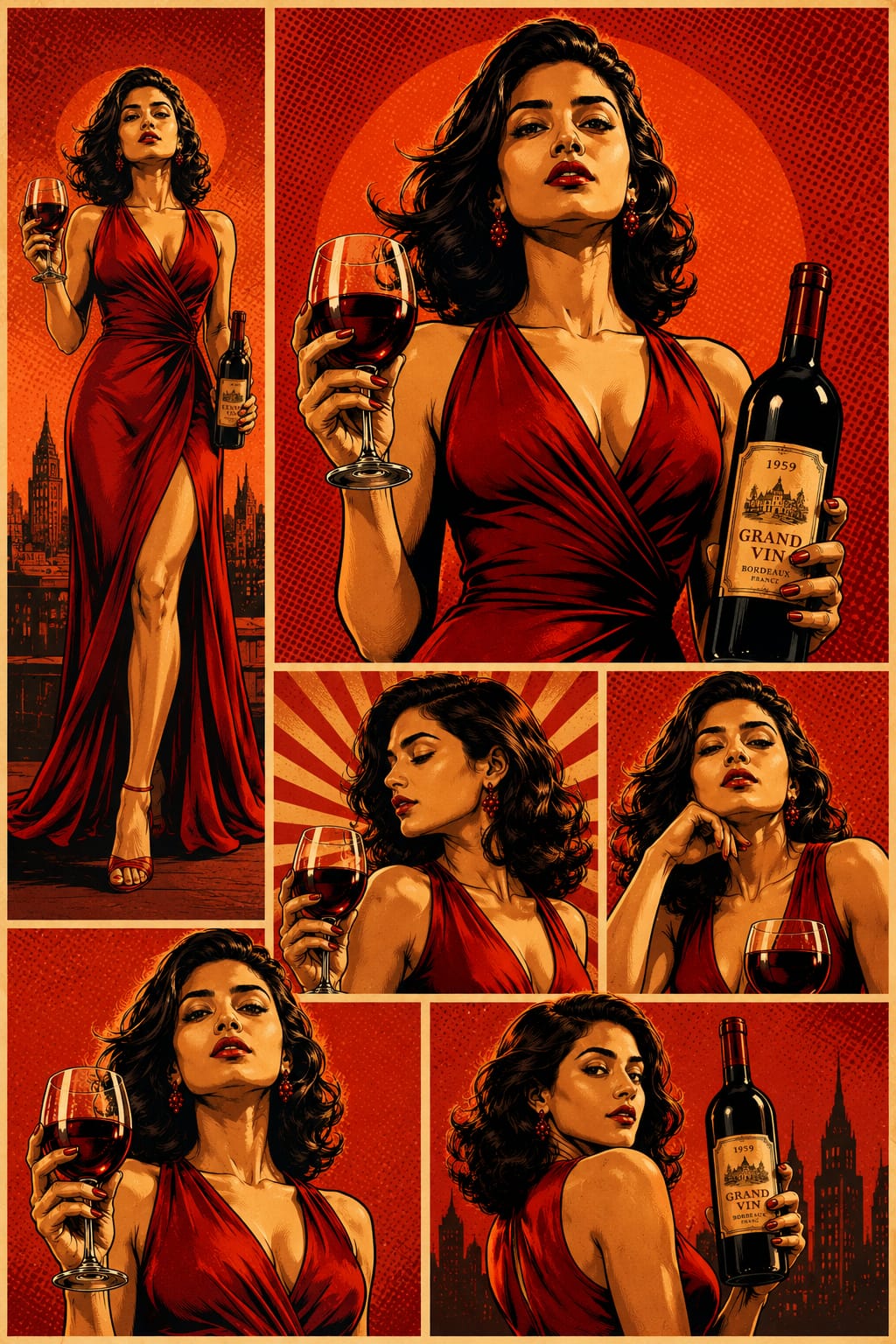
Try red and black noir, teal and orange, purple and yellow, monochrome blue, or vintage sepia comic tones.
Change the Mood
Experiment with mystery, suspense, loneliness, anxiety, determination, action, or psychological thriller.
Change the Panel Style
Try a traditional six-panel comic page, manga-inspired layout, cinematic widescreen panels, vertical webtoon format, or fragmented experimental composition.
Best Use Cases
This concept works especially well for graphic-novel pages, comic-book storytelling, cinematic character artwork, Instagram carousel posts, webtoon concepts, movie storyboard visuals, thriller artwork, and illustrated narratives. The combination of bold ink, halftone shading, dynamic panels, elevator tension, and yellow sound effects creates a strong contemporary comic-book aesthetic.