Copy & use anywhere
Use the uploaded reference image as a strict face and identity reference.

PRESERVE IDENTITY 100%:
Keep the woman's face exactly accurate to the uploaded reference — same facial structure, skin tone, age, eyes, eyebrows, nose, lips, cheeks, jawline, hairline, and all distinctive facial details. No face alteration, beautification, slimming, aging, face swap, or artificial facial changes.

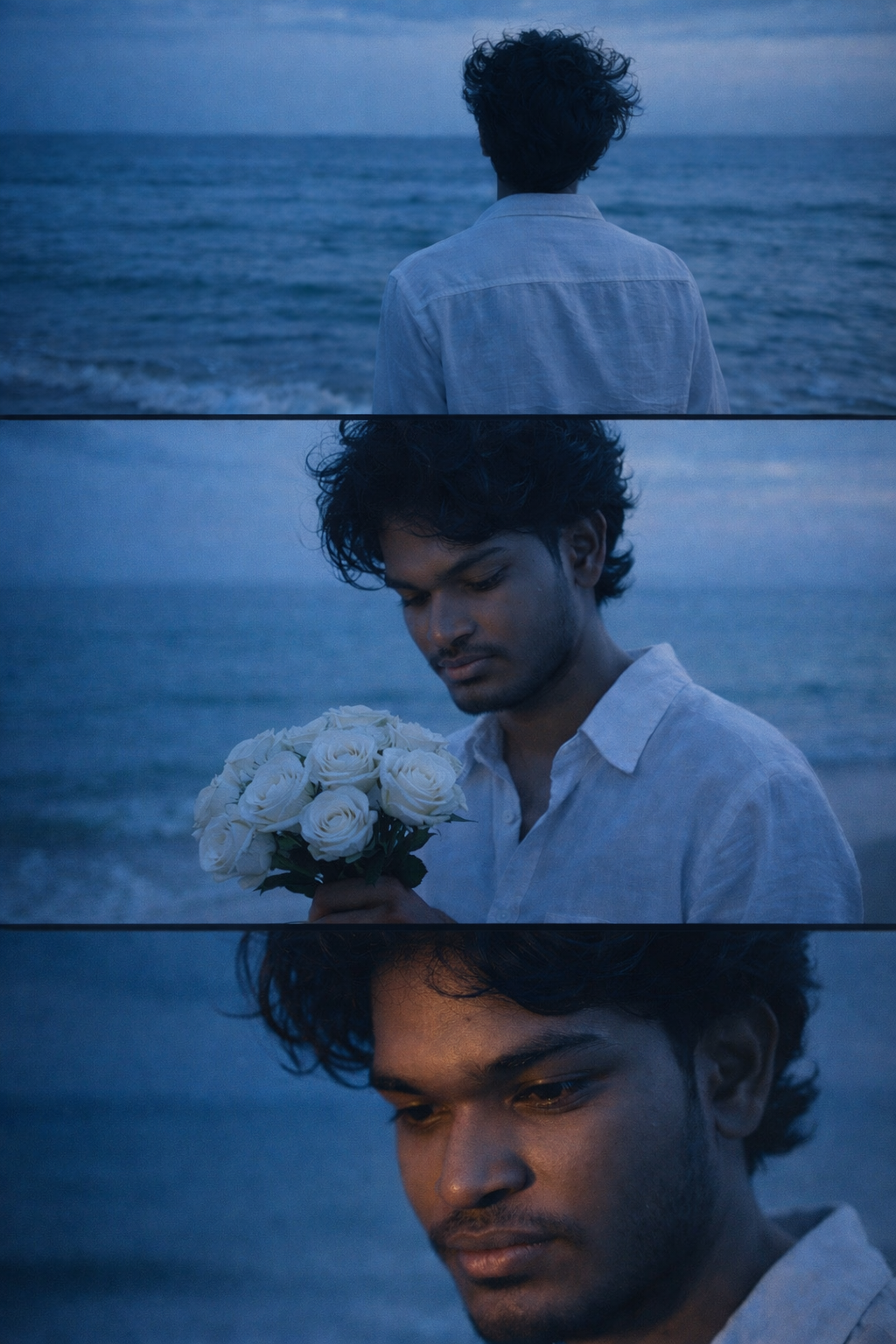
Create a 64K ultra-hyper-realistic cinematic fine-art portrait triptych of the same young adult Indian woman, approximately 20 years old, with a natural chubby body and face matching the reference image.

COMPOSITION:
Create ONE single image divided into THREE horizontal cinematic panels stacked vertically. All three panels must show the exact same woman with perfectly consistent identity, facial proportions, styling, color grading, lighting, and atmosphere.

TOP PANEL:
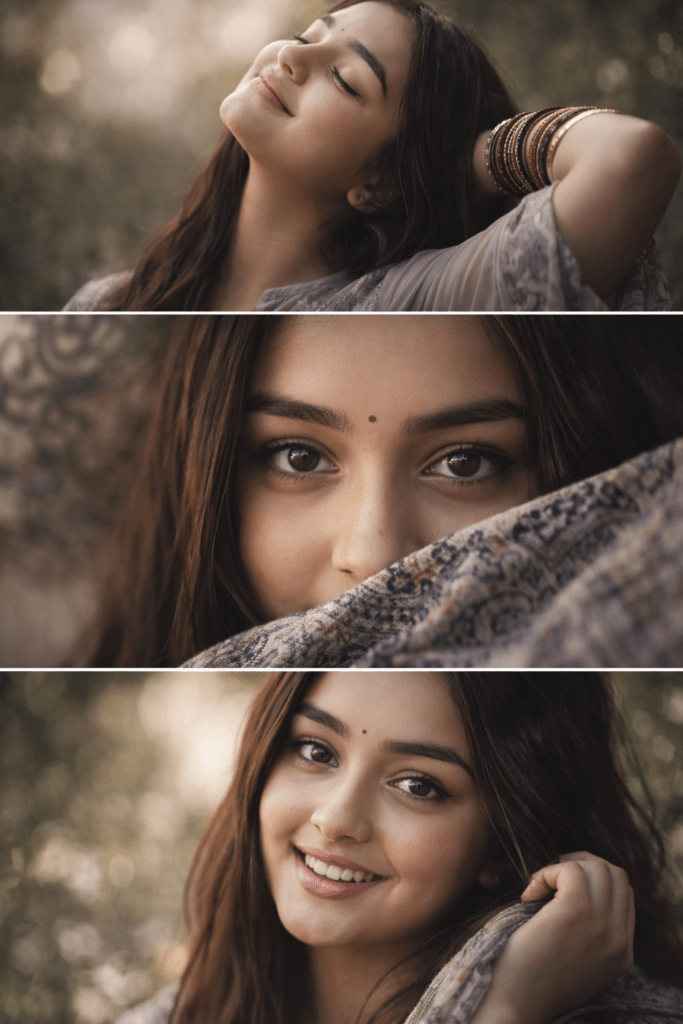
Show the woman with her head naturally tilted backward, eyes fully closed, expressing calmness and emotional depth. Her arm is visible with elegant traditional bangles. Capture soft natural movement in her hair and realistic skin texture.

MIDDLE PANEL:
Create an intimate close-up focused on her eyes looking directly into the camera. Part of her face is naturally obscured by a beautiful patterned traditional fabric, creating an artistic layered composition. Her eyes must remain highly detailed and unmistakably match the reference.

BOTTOM PANEL:
Create a complementary cinematic close-up portrait of the same woman, maintaining the exact reference identity, natural chubby facial features, realistic expression, and refined fine-art photography aesthetic.

LIGHTING:
Dramatic yet soft white portrait lighting blended with natural outdoor light. Gentle highlights, deep soft shadows, realistic light falloff, subtle atmospheric depth, and premium cinematic contrast.

NATURE & ATMOSPHERE:
Surround the portrait with a sophisticated natural environment and soft organic textures. Keep the background elegant, minimal, slightly dreamy, and realistic without distracting from the subject.

COLOR & TEXTURE:
Consistent cinematic color grading across all three panels, soft neutral and natural tones, subtle film grain, realistic skin pores, individual hair strands, detailed bangles, authentic fabric texture, natural shadows, HDR, extremely refined tonal range.

CAMERA & QUALITY:
Professional full-frame cinematic photography, premium portrait lens, realistic optical depth, sharp facial details, natural depth of field, ultra-fine skin and fabric texture, high dynamic range, 64K ultra-detailed quality.

STYLE:
Ultra-hyper-realistic cinematic vision, luxury fine-art portrait photography, natural Indian beauty, emotional editorial photography, premium movie-still aesthetic. Real photograph only — not illustration, not painting, not CGI, not artificial or overly retouched.
About This AI Image Prompt
This prompt creates a cinematic portrait triptych that explores three different emotional moments while keeping the same woman visually consistent throughout the composition. Instead of presenting three unrelated portraits, the image is divided into three horizontal panels that work together as one fine-art photograph.
Identity consistency is central to the concept. The uploaded reference establishes the woman’s facial structure, skin tone, age, hairline, and distinctive features, while the three panels explore different expressions and perspectives without changing who she is.
The top panel emphasizes stillness and emotional release through a naturally tilted head, closed eyes, moving hair, and traditional bangles. The middle panel becomes more intimate, concentrating attention on the eyes while patterned fabric partially covers the face. This creates a layered composition in which the eyes become the strongest visual point.
The bottom panel provides a complementary close-up, completing the visual sequence. Consistent lighting, color grading, textures, and atmosphere connect all three sections into one cohesive story.
The combination of natural beauty, traditional details, subtle environmental textures, and cinematic portrait treatment gives the image a quiet, contemplative character.
Understanding the Visual Style
The visual style combines fine-art portrait photography, cinematic editorial photography, Indian-inspired styling, and triptych composition. Its emphasis is on emotional subtlety rather than dramatic action.
The three panels provide different levels of intimacy. The top image feels more open and reflective, the middle panel draws the viewer directly toward the eyes, and the bottom panel returns to a conventional close portrait.
Soft neutral colors help maintain visual continuity across the panels. Traditional bangles and patterned fabric introduce cultural texture without overwhelming the minimalist aesthetic.
The fine-art influence comes from the controlled composition, restrained atmosphere, natural expressions, and attention to physical texture. The requested photographic realism keeps the result grounded in believable skin, hair, fabric, and lighting.
Technical Prompt Breakdown
The prompt requests professional full-frame cinematic photography and a premium portrait lens, but it does not specify a particular camera body, focal length, aperture, ISO, or shutter speed. Those technical specifications should therefore remain open.
The most important technical requirement is consistency across the three panels. Facial proportions, identity, styling, lighting, color grading, and atmosphere are expected to remain visually coherent.
Natural depth of field is requested so the subject can remain separated from the surrounding environment while retaining enough background information to establish context.
The prompt also emphasizes realistic skin pores, individual hair strands, detailed bangles, and authentic fabric texture. These details help prevent the image from appearing overly smooth or digitally constructed.
High dynamic range and a refined tonal range support the transition between highlights and soft shadows while preserving detail throughout the triptych.
Lighting, Colors & Composition
The lighting combines soft white portrait illumination with natural outdoor light. This creates gentle highlights on the face and clothing while maintaining realistic shadows and gradual light falloff.
The color palette is based around soft neutral and natural tones. This restrained approach allows skin, fabric, hair, and traditional accessories to remain visually important without introducing distracting colors.
The three horizontal panels form the primary compositional structure. The top panel establishes the broader emotional moment, the middle panel creates intimacy through the eye-focused close-up, and the bottom panel provides a complementary conclusion.
The patterned fabric in the middle panel adds visual layering, while the bangles in the top panel introduce a small but meaningful traditional detail. Subtle environmental textures help the portraits feel connected to a real setting without competing with the face.
How to Customize This Prompt
Change the Traditional Fabric
Replace the patterned fabric with a translucent dupatta, embroidered saree fabric, floral textile, or another traditional material. Different patterns can make the middle panel feel more delicate, dramatic, or culturally distinctive.
Change the Top-Panel Expression
The closed eyes create a peaceful mood. A gentle downward gaze or subtle side profile could introduce a more introspective feeling while maintaining the triptych’s emotional character.
Modify the Environment
The natural background can be adapted to a garden, countryside setting, softly lit terrace, or minimalist outdoor location. Keeping the environment understated will preserve the portrait-focused composition.
Adjust the Color Palette
Soft beige, cream, muted green, warm brown, or cool neutral tones can replace the general natural palette. Warmer tones create a nostalgic atmosphere, while cooler neutrals can make the image feel more contemporary.
Change the Panel Relationships
The three panels can use different crops while maintaining the same identity. A wider top panel, extremely close middle panel, and medium close-up bottom panel can create stronger visual rhythm while keeping the overall structure intact.
Best Use Cases
This triptych can work well for fine-art portrait projects, Pinterest content, social media storytelling, Indian fashion inspiration, editorial photography, creative portfolios, cultural visual campaigns, mood boards, and premium digital artwork. The three-panel structure is particularly effective when the goal is to communicate different emotions within one cohesive image. For commercial use, check the AI generator’s licensing terms and ensure you have appropriate rights to the uploaded reference image and any third-party assets.