Copy & use anywhere
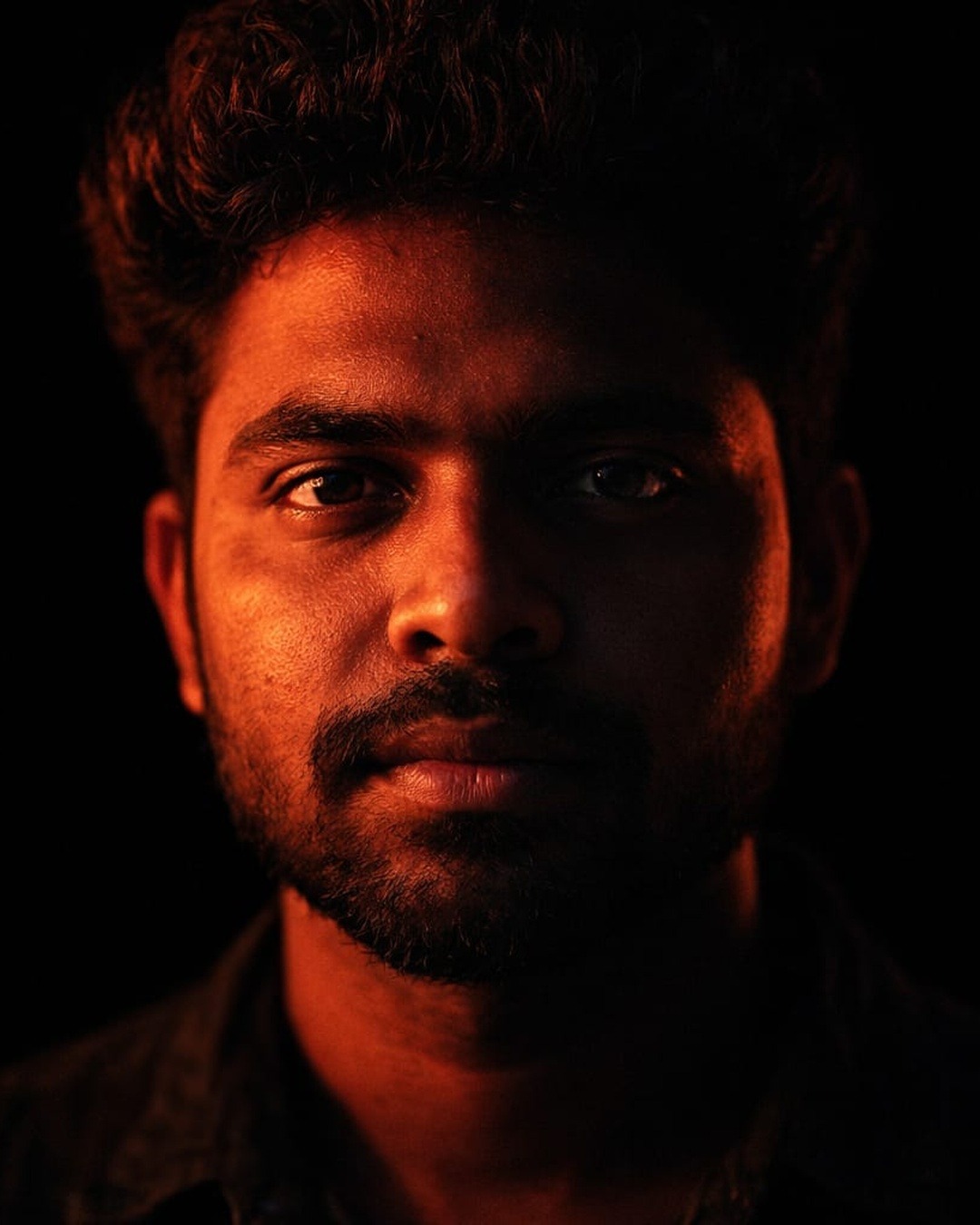
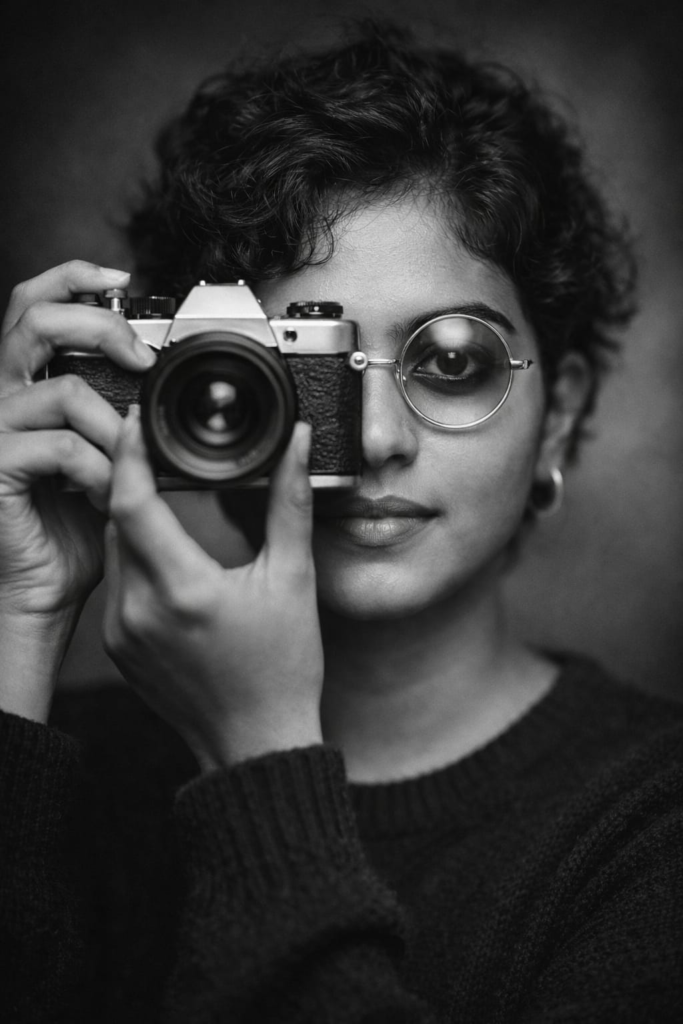
Ultra-realistic black-and-white close-up portrait photo of the SAME PERSON from the uploaded reference image (use uploaded image as FACE ID / identity reference). Preserve exact identity and facial structure: same eyes, same nose, same lips, same jawline, same skin tone, same hairline, same age. Do not change the person and do not generate a different face.
Tight close-up headshot, centered framing, face fills the frame.
Subject holding a vintage retro 35mm film camera up to the face, camera covering one eye, camera lens perfectly centered in the frame.
The other eye is visible wearing one single round reflective sunglass lens (monocle-style / single lens only).
Messy short curly hair, minimal makeup, small hoop earring, wearing a dark sweater.
Photography style: high-contrast monochrome, soft studio lighting, sharp details, ultra high resolution, classic editorial portrait photography, subtle film grain, 35mm analog look, shallow depth of field, smooth clean background bokeh.
About This AI Image Prompt
This prompt creates a distinctive black-and-white editorial portrait built around the visual relationship between a person and a vintage 35mm film camera. Rather than simply photographing someone holding a camera, the composition makes the camera an extension of the subject’s face, creating a layered portrait in which technology, fashion, and identity become part of the same visual story.
Identity preservation is particularly important because the uploaded reference establishes the subject’s recognizable facial characteristics. The eyes, nose, lips, jawline, skin tone, hairline, and age are intended to remain consistent while the styling and photographic setting change.
The camera covering one eye becomes the dominant visual feature. The remaining eye is visible through a single round reflective lens, creating an unusual asymmetrical composition. Messy curly hair, a small hoop earring, and a dark sweater keep the styling understated so the camera and face remain the main focus.
The monochrome treatment further simplifies the image. Without competing colors, attention shifts toward facial texture, camera details, reflections, hair, and the relationship between light and shadow.
Understanding the Visual Style
The visual style combines classic editorial portraiture, analog photography aesthetics, monochrome fashion photography, and vintage camera culture. The 35mm camera is both a prop and a central compositional element.
High-contrast black-and-white tones give the portrait a timeless quality, while subtle film grain reinforces the analog inspiration. The dark sweater and camera naturally create strong tonal areas, allowing the visible eye and reflective lens to stand out.
The clean background keeps the composition focused. Instead of using a complicated environment, the prompt relies on the unusual framing and camera placement to create visual interest.
The overall result is intended to resemble an editorial photograph celebrating traditional film photography while retaining modern portrait realism.
Technical Prompt Breakdown
The prompt requests a tight close-up headshot with centered framing, meaning the face and camera occupy most of the image. The camera lens is specifically positioned at the center of the frame, creating a strong geometric focal point.
The vintage 35mm film camera covers one eye, while the other eye remains visible through a single round reflective lens. This unusual arrangement requires careful visual consistency between the camera, face, and accessory.
A shallow depth of field is requested so the subject remains sharp while the background becomes softly blurred. The prompt also specifies soft studio lighting, high-resolution detail, and subtle film grain.
The analog 35mm look contributes photographic texture, but no specific camera aperture, ISO, shutter speed, or digital camera body is provided. Those details should not be invented.
Lighting, Colors & Composition
Soft studio lighting provides gentle illumination across the visible face, hair, camera body, and clothing. Because the image is monochrome, subtle differences in brightness become particularly important for separating these elements.
The high-contrast treatment creates a strong relationship between bright highlights and deep shadows. The reflective sunglass lens becomes a small but important bright detail, while the camera’s darker body provides visual weight.
The centered composition gives the photograph a graphic quality. The camera lens placed in the center acts almost like a second focal point alongside the visible eye.
The background remains clean and softly blurred, preventing environmental details from distracting from the unusual camera-and-face arrangement.
How to Customize This Prompt
Change the Camera
Replace the vintage 35mm camera with a different classic film camera, rangefinder, instant camera, or compact retro camera. Different camera shapes can change the visual character while preserving the same concept.
Modify the Visible Eye Accessory
The single round reflective lens can be replaced with a clear lens, colored lens, or subtle metallic frame. Keeping one eye visually unobstructed preserves the asymmetrical composition.
Change the Hair Styling
The messy curly hairstyle can be replaced with slicked-back hair, loose waves, a short textured cut, or another natural style. A more polished hairstyle can make the portrait feel more luxury-editorial.
Adjust the Clothing
Replace the dark sweater with a black turtleneck, oversized blazer, vintage jacket, or simple knitwear. Dark clothing maintains the strong monochrome foundation.
Change the Background Treatment
The clean bokeh background can be made completely white, charcoal, dark grey, or softly textured. A darker background can increase contrast, while a lighter one creates a cleaner editorial appearance.
Best Use Cases
This concept can work particularly well for photography portfolios, Pinterest content, editorial portraits, film-photography campaigns, creative social media posts, camera-related branding, fashion editorials, magazine artwork, and analog photography inspiration. The distinctive camera-centered composition can also make it useful as a visual identity concept for photography projects. For commercial use, check the AI generator’s licensing terms and ensure the uploaded reference photograph and any camera-brand markings or third-party assets are appropriately authorized.