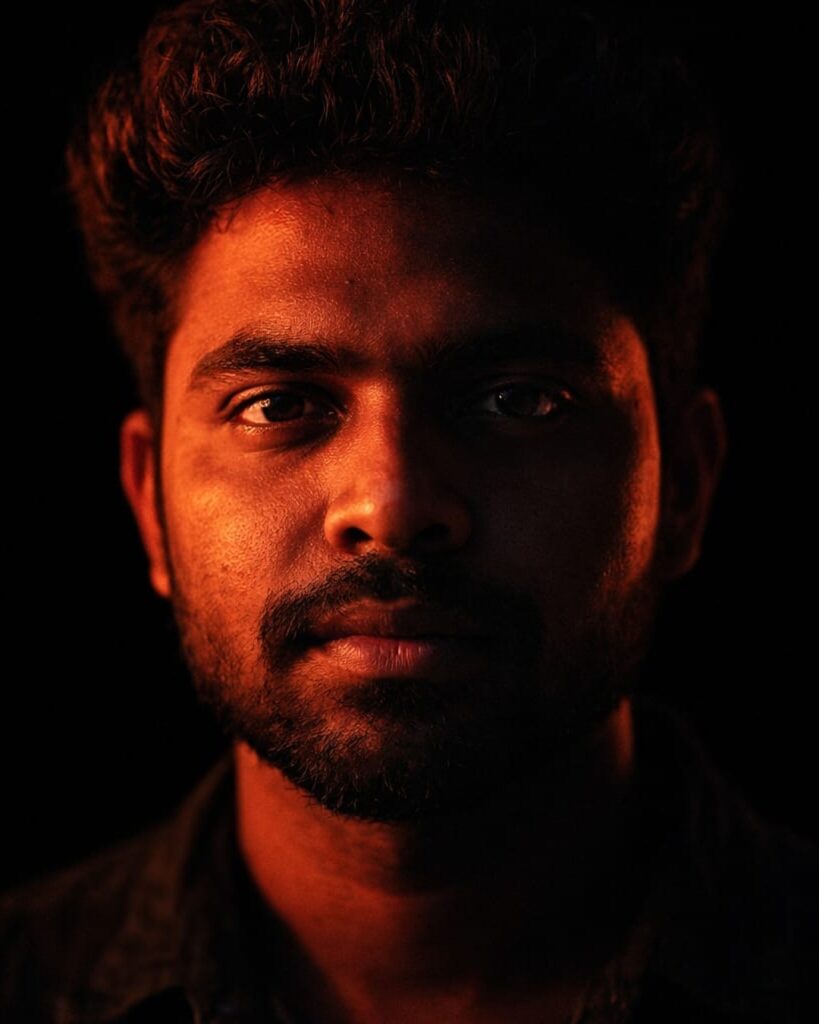
Ultra cinematic dramatic low-key CLOSE-UP portrait (headshot) photo of the SAME PERSON from the uploaded reference image (use as FACE ID / identity reference). Preserve exact identity and facial structure: same eyes, same nose, same lips, same jawline, same beard/mustache style, same skin tone, same hairstyle, same hairline, same age. Do not change the person and do not generate a different face.
Tight close-up headshot, face fills the frame, eye-level angle, centered composition.
Deep black background, high contrast, strong dramatic shadows.
Intense red/orange side lighting (single key light from one side), half face lit, half face disappearing into darkness.
Sharp focus on eyes, realistic skin pores and texture, cinematic film grain, noir thriller mood.
Studio-quality lighting, premium cinematic color grading, ultra realistic photography, 8k, minimal background.
This prompt is designed to create an intense cinematic headshot built almost entirely around facial expression, lighting, and shadow. The composition is deliberately tight, with the person’s face filling most of the frame so that the viewer’s attention is directed immediately toward the eyes and natural facial structure.
Identity preservation is central to the concept. The uploaded reference image provides the facial foundation, including the eyes, nose, lips, jawline, beard or mustache, skin tone, hairstyle, hairline, and age. Rather than transforming the person into a different character, the visual treatment changes the atmosphere around the existing identity.
The dramatic lighting creates the main storytelling element. A strong red-orange light illuminates only one side of the face, while the opposite side gradually disappears into deep darkness. This creates a feeling of mystery and psychological tension.
The black background removes environmental distractions and allows the illuminated facial features to become the sole focal point. Combined with sharp eye detail, natural skin texture, and cinematic grading, the portrait is designed to resemble a carefully lit frame from a serious noir thriller.
Understanding the Visual Style
The visual style combines cinematic close-up photography, noir portraiture, low-key studio lighting, and thriller-inspired editorial aesthetics. The image relies on extreme tonal contrast rather than elaborate styling or environmental elements.
The deep black background provides almost complete visual isolation, making the face appear to emerge from darkness. The red-orange illumination introduces a dramatic color accent while maintaining the predominantly dark atmosphere.
The composition is intentionally minimal. Because there is no distracting scenery or complicated wardrobe, small details such as the eyes, beard, skin texture, and facial contours become especially important.
The cinematic film grain adds subtle photographic texture, helping the image feel like a frame from a professionally produced thriller rather than a perfectly smooth digital portrait.
Technical Prompt Breakdown
The prompt specifically calls for a tight close-up headshot with an eye-level camera angle and centered composition. The face should occupy most of the frame, making the eyes and facial details the dominant visual elements.
The lighting is described as a single strong side key light, illuminating approximately half of the face while allowing the other side to disappear into shadow. This is a classic low-key approach that creates strong facial dimensionality and dramatic tonal separation.
Sharp focus is particularly important around the eyes because they are the primary focal point. The prompt also requests realistic pores and skin texture to prevent excessive smoothing.
The prompt does not specify a particular camera body, lens, aperture, ISO, or shutter speed, so those settings should not be invented. The important technical characteristics are tight framing, controlled side lighting, sharp facial detail, and realistic photographic rendering.
Lighting, Colors & Composition
The lighting is the defining feature of this portrait. A concentrated red-orange side light illuminates one side of the face, creating warm highlights along the skin and facial contours. The opposite side remains largely hidden within deep shadow.
This lighting approach creates a strong visual division between illumination and darkness. It also gives the eyes greater importance because they remain one of the most visually detailed areas within the otherwise shadow-heavy composition.
The background is pure or near-pure black, allowing the face to stand apart without environmental distractions. The centered framing creates symmetry, while the uneven lighting introduces visual tension within that symmetry.
The color palette is intentionally restricted to black, natural skin tones, and red-orange highlights. This limited palette strengthens the noir atmosphere and prevents the portrait from becoming visually cluttered.
How to Customize This Prompt
Change the Light Color
Replace the red-orange illumination with deep blue, purple, green, or warm amber. Blue can create a colder thriller mood, while amber produces a more classic cinematic appearance.
Adjust the Shadow Balance
Illuminate slightly more of the face for a cleaner editorial portrait, or allow the shadowed side to become even darker for a more mysterious result. The amount of visible facial detail can significantly change the emotional tone.
Change the Expression
A neutral expression can create quiet mystery, while a slightly narrowed gaze can make the portrait feel more intense. A relaxed expression can produce a more sophisticated fashion-editorial interpretation.
Modify the Framing
Keep the extreme headshot for maximum intensity, or pull the camera back slightly to include the neck and shoulders. A wider crop can introduce clothing as an additional visual element.
Change the Background
The pure black background can be replaced with a very subtle charcoal gradient or dark atmospheric studio backdrop. Keeping it extremely minimal will preserve the dramatic facial focus.
Best Use Cases
This portrait can work well for cinematic posters, thriller-inspired artwork, men’s editorial photography, Pinterest content, social media profile visuals, creative portfolios, music artwork concepts, fashion campaigns, and dramatic personal branding. Its strong lighting makes it particularly effective when a bold, mysterious visual identity is desired. For commercial projects, check the AI generator’s licensing terms and ensure the uploaded reference photograph and any additional third-party assets are authorized for the intended use.