Copy & use anywhere
Use the uploaded reference photo as the identity reference for the person. Preserve the person’s exact facial identity, facial structure, hairstyle, skin tone, age, eyes, eyebrows, nose, lips, jawline, beard/stubble, and natural facial proportions.

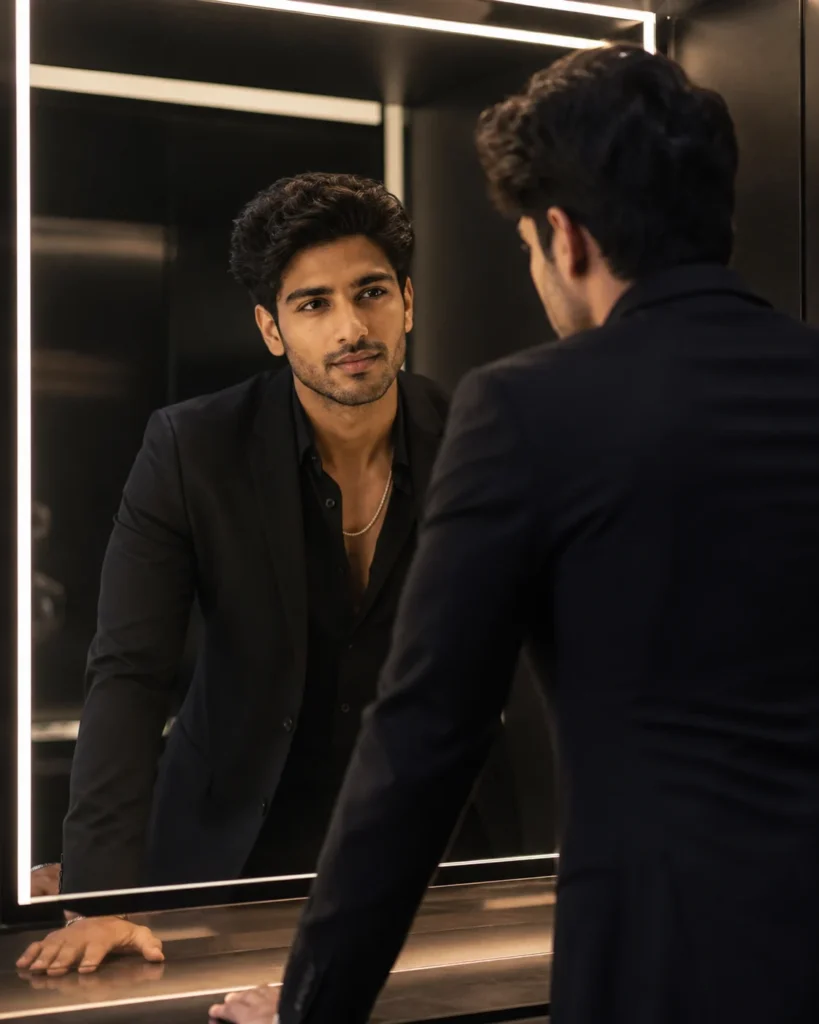
Create an ultra-realistic cinematic mirror portrait of the person standing and leaning forward over a luxurious modern vanity counter, with both hands naturally resting on the countertop. The camera is positioned behind the person, showing the back and shoulders in the foreground, while a large wall-to-wall LED-framed mirror clearly reveals their face in sharp focus.

The person is wearing a tailored black suit jacket over a black shirt with the top buttons slightly open, revealing a minimal silver chain necklace. Maintain a sophisticated luxury-fashion appearance.

The mirror should be very large and dominant in the composition, extending almost from the countertop to the ceiling and spanning most of the wall. Use a thin, elegant LED light border around the entire mirror, creating a premium dressing-room atmosphere.

Set the scene inside a high-end matte-black dressing room / luxury bathroom vanity, featuring dark walls, subtle reflections, a sleek black stone countertop, minimalist fixtures, and an uncluttered background. Add soft warm LED illumination around the mirror, creating cinematic highlights on the face and subtle rim lighting around the subject.

The reflection must look physically accurate: the reflected face, hairstyle, clothing, body position, and hand placement must correspond naturally to the person standing in front of the mirror. The reflection is the visual focal point.

Use realistic skin pores, natural facial texture, individual hair strands, detailed beard stubble, realistic fabric texture, physically accurate reflections, soft shadows, cinematic depth, and premium editorial photography aesthetics.

Camera: professional full-frame camera, 85mm portrait lens, f/1.8, shallow depth of field, sharp facial focus in the mirror, slightly softer foreground subject, realistic perspective, high dynamic range.

Lighting: warm cinematic LED lighting, soft directional illumination, subtle highlights, controlled shadows, natural skin tones, sophisticated low-key lighting.

Style: ultra-photorealistic, luxury fashion editorial, cinematic photography, premium magazine aesthetic, realistic color grading, HDR, extremely detailed, natural proportions, 8K quality.

Composition: vertical portrait, 4:5 aspect ratio, large mirror dominating the background, person occupying the right/foreground portion of the frame, face centered within the mirror reflection, both hands visible resting on the vanity counter, dramatic dual-perspective composition.

Negative prompt: cartoon, illustration, CGI, plastic skin, artificial face, distorted reflection, duplicate face, incorrect mirror reflection, extra fingers, missing hands, deformed hands, warped body, unrealistic anatomy, excessive retouching, oversaturated colors, blurry face, low resolution, text, watermark, logo, AI artifacts.
Cinematic Mirror Portrait AI Prompt: Luxury Mirror Photography
There is something instantly striking about a portrait where the subject is photographed through their own reflection. A large mirror adds depth, symmetry, and a sense of quiet drama that is difficult to achieve with an ordinary portrait setup. This cinematic mirror portrait concept combines a luxurious vanity, tailored styling, and controlled lighting to create an image that feels closer to a high-end fashion campaign than a typical AI-generated photo.
The Look: Elegant, Dark, and Cinematic
The visual direction leans toward modern luxury photography with a subtle editorial-film aesthetic. The subject is dressed in a sharp black suit with a slightly open black shirt, creating a refined but relaxed appearance. Rather than relying on a simple mirror selfie, the scene places the camera behind the subject while their face appears clearly in the large illuminated mirror.
The darker wardrobe works particularly well against a sophisticated interior. Soft highlights around the mirror, polished surfaces, and restrained metallic details give the environment an expensive feel without making it overly decorative. The overall mood is confident, mysterious, and composed.
Why the Camera Position Matters
The camera placement is one of the most important parts of this concept. Shooting from behind the person allows the viewer to see their shoulders and back in the foreground while simultaneously getting a direct view of their face through the reflection. That layered perspective makes the photograph feel more cinematic and three-dimensional.
Another important choice is the oversized mirror. A small mirror can make the scene feel cramped and resemble an ordinary bathroom selfie. A wide luxury mirror gives the reflection enough breathing room and allows the vanity, lighting, and surrounding architecture to contribute to the photograph.
Lighting should remain controlled rather than extremely bright. The illuminated mirror provides a clean edge of light around the reflection, while softer ambient illumination keeps the suit and background from disappearing into black.
Make the Scene Your Own
You can adapt this concept without losing its premium character. Try placing the vanity inside a modern penthouse bathroom with marble surfaces for a more architectural look. For something warmer, introduce subtle champagne-gold fixtures and warmer mirror illumination.
Another interesting variation is changing the pose slightly. Instead of leaning forward heavily, the subject could rest one hand on the counter while adjusting a cufflink with the other. This creates a more natural luxury-editorial moment.
You can also experiment with the reflection itself. Keeping the real person slightly turned while having their reflected face look directly toward the camera can produce a particularly powerful fashion-photography effect.
What I Learned Testing It
I tested this style with several image generators, and I found that models with stronger image-reference handling produced more believable facial reflections. One small change made a noticeable difference: I emphasized that the face should remain clearly visible inside the large mirror rather than asking for a “mirror portrait” alone. I also found that overly complicated bathroom décor often distracted from the subject, so keeping the background luxurious but restrained worked better.
Where This Portrait Works Best
This cinematic mirror concept is a strong choice for fashion-editorial posts, luxury lifestyle content, personal branding, social media profile imagery, and AI photography portfolios. It can also work beautifully as a website hero image or Pinterest visual when you want something darker and more sophisticated than a conventional portrait.
If you’re experimenting with cinematic AI photography, this is a particularly useful concept to try because the mirror introduces a second viewpoint without requiring a complicated scene. With the right identity reference and controlled environment, it can turn a simple portrait idea into something that feels polished, intentional, and genuinely cinematic.