Copy & use anywhere
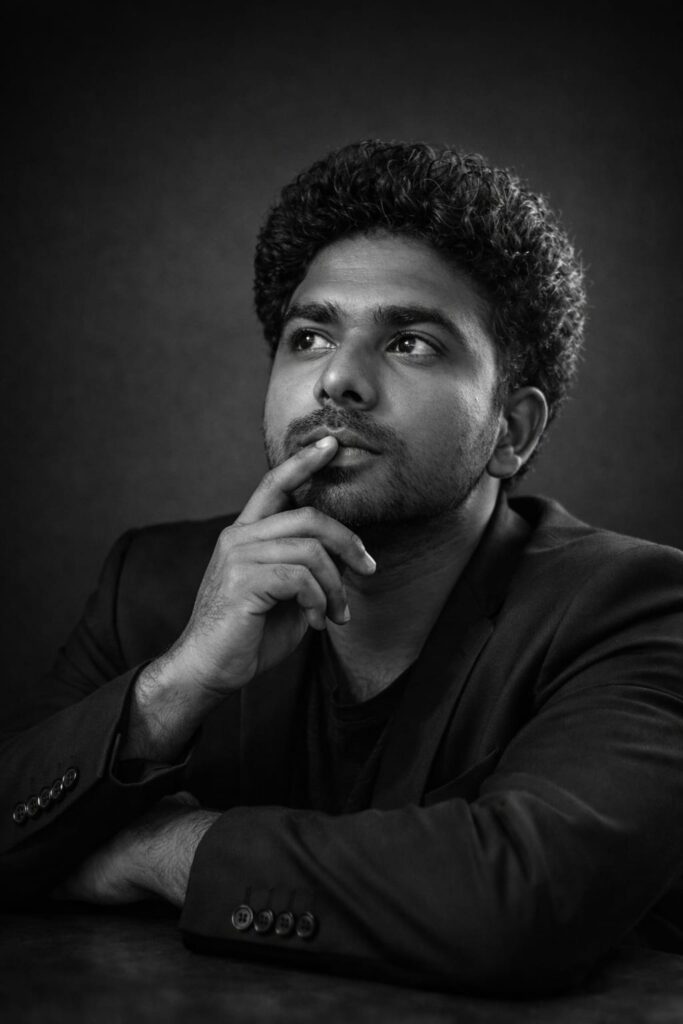
Hyper-realistic black and white cinematic studio portrait of a handsome young man wearing a dark formal blazer/suit jacket over a plain crew-neck shirt, sitting with arms crossed on a table/surface, side angle pose (3/4 view from right side), head tilted slightly upward, looking up to the left, thoughtful expression. Right hand raised to face with index finger touching lips/chin (thinking pose). Strong low-key dramatic lighting from upper-left, deep shadows and bright highlights on face and hand, ultra detailed skin texture, sharp focus, clean monochrome tones, smooth dark grey plain background with huge empty negative space above the subject, minimal composition, editorial fashion fine-art portrait photography, DSLR studio shot, 85mm lens, f/1.8, shallow depth of field, HDR, 8K, ultra realistic.
About This AI Image Prompt
This prompt creates a sophisticated black-and-white studio portrait built around contemplation, authority, and cinematic minimalism. The young man is seated with his arms crossed on a surface, positioned in a three-quarter side angle while looking upward toward the left. This combination of posture and gaze gives the image the feeling of someone absorbed in thought rather than consciously posing for the camera.
The dark formal blazer or suit jacket establishes a polished editorial appearance, while the plain crew-neck shirt keeps the styling understated. The raised index finger touching the lips or chin introduces a recognizable thinking gesture that strengthens the portrait’s intellectual and reflective character.
The large empty space above the subject is an important part of the composition. Instead of filling the entire frame, the prompt deliberately leaves substantial negative space, creating a sense of scale and visual calm.
The monochrome treatment further emphasizes facial structure, hand position, fabric, and lighting. Together with the dark grey background and dramatic illumination, these choices create a refined fine-art portrait with a cinematic studio atmosphere.
Understanding the Visual Style
The visual style combines fine-art portrait photography, cinematic studio lighting, editorial fashion photography, and monochrome aesthetics. Its restrained approach makes the subject’s posture and expression the primary storytelling elements.
Black-and-white treatment removes distractions from clothing and background colors, allowing the viewer to concentrate on tonal relationships and facial detail. The dark blazer blends naturally into the darker environment while illuminated areas of the face and hand provide contrast.
The large negative space gives the portrait a premium editorial quality. It also creates an unusual visual balance, with the subject occupying a smaller portion of the overall frame while still commanding attention.
The result is intended to feel sophisticated, thoughtful, and cinematic rather than casual or overly posed.
Technical Prompt Breakdown
The prompt specifies an 85mm lens with an f/1.8 aperture. An 85mm lens is well suited to portrait photography and can provide a natural-looking perspective while creating useful separation from the background.
The f/1.8 aperture supports the requested shallow depth of field, allowing the subject to remain prominent while the dark grey background becomes softer and less visually defined.
The three-quarter right-side angle creates a more dimensional view of the face than a direct frontal portrait. The upward head position and leftward gaze further define the direction of the composition.
The prompt also requests HDR, sharp focus, and detailed skin texture. These elements help preserve information across the illuminated face, hand, clothing, and darker surroundings. No specific ISO or shutter speed is provided, so those settings should not be invented.
Lighting, Colors & Composition
The lighting is low-key and directional, coming from the upper-left. This creates bright highlights on selected areas of the face and raised hand while allowing other portions of the portrait to fall into deeper shadow.
The monochrome palette emphasizes these differences in brightness. Instead of relying on color, the image uses highlights, midtones, and deep blacks to create depth and visual hierarchy.
The smooth dark grey background remains deliberately simple. Its large empty area above the subject creates negative space that contrasts with the concentrated detail around the face and hands.
The crossed arms establish a strong horizontal element, while the raised hand and upward gaze create diagonal movement. Together, these directions keep the minimalist composition visually engaging.
How to Customize This Prompt
Change the Seating Position
The subject can sit slightly farther from the table, lean forward, or rest one arm more casually. A forward lean can make the portrait feel more intense, while a relaxed position creates a calmer editorial mood.
Modify the Thinking Gesture
The index finger can remain near the lips, move toward the chin, or be replaced by a hand resting lightly against the cheek. Small changes can alter the emotional character without changing the overall composition.
Adjust the Lighting
Move the key light farther to the side for stronger facial shadows or make it softer for a more refined portrait. A subtle rim light could also separate the shoulders from the dark background.
Change the Background
The plain dark grey backdrop can become charcoal, near-black, or a subtle studio gradient. Keeping it uncluttered preserves the negative-space concept.
Alter the Framing
Increase the empty space above the subject for a more editorial poster-like composition, or crop closer to emphasize the eyes, facial expression, and thinking gesture.
Best Use Cases
This portrait concept is suitable for professional personal branding, men’s fashion editorials, creative portfolios, Pinterest content, magazine-style photography, leadership imagery, cinematic posters, social media campaigns, and fine-art portrait collections. Its large negative space can also provide useful room for later design elements in layouts. For commercial use, verify the AI generator’s licensing terms and ensure any reference images, logos, or third-party assets used in the final project are appropriately authorized.