Prompt:

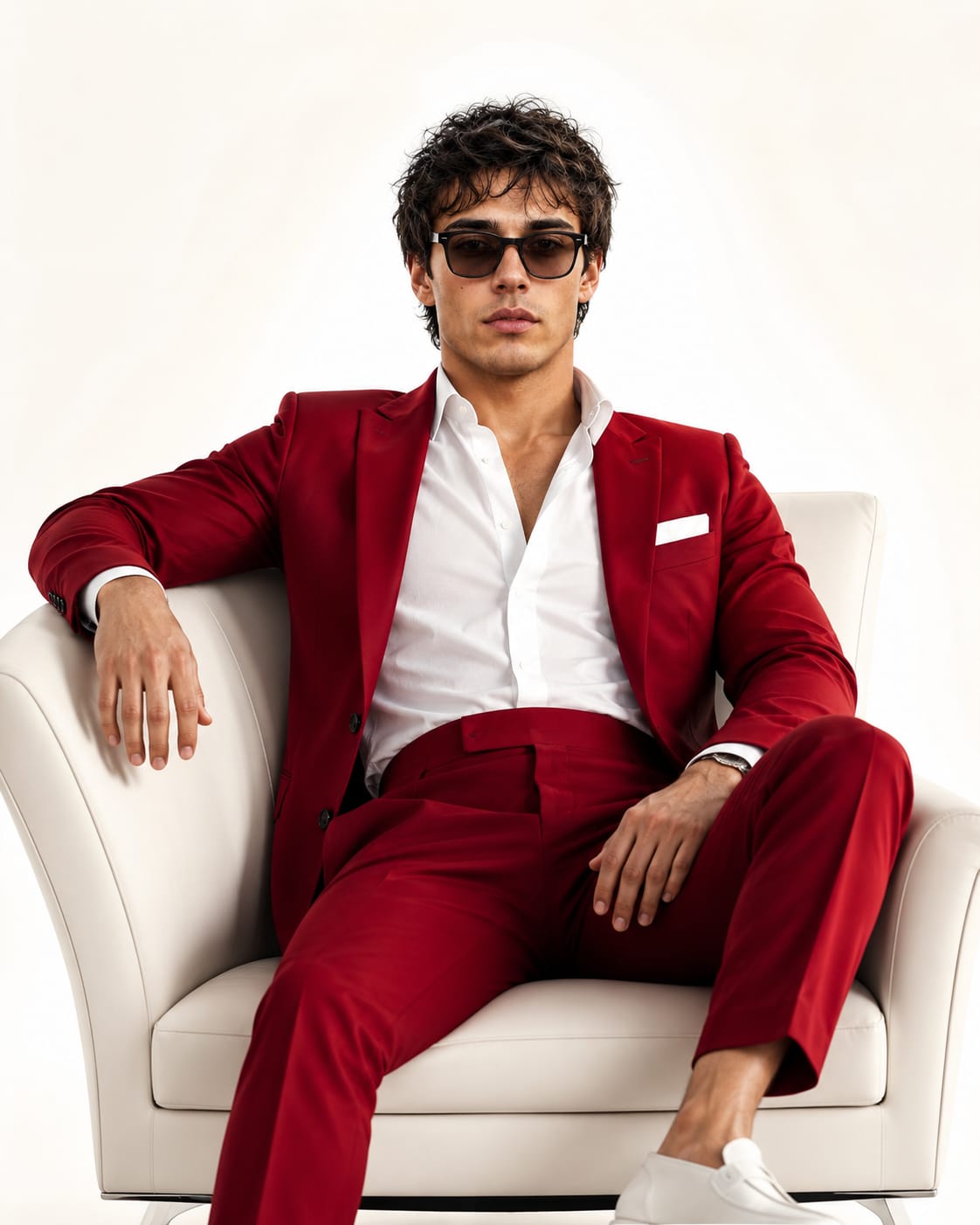
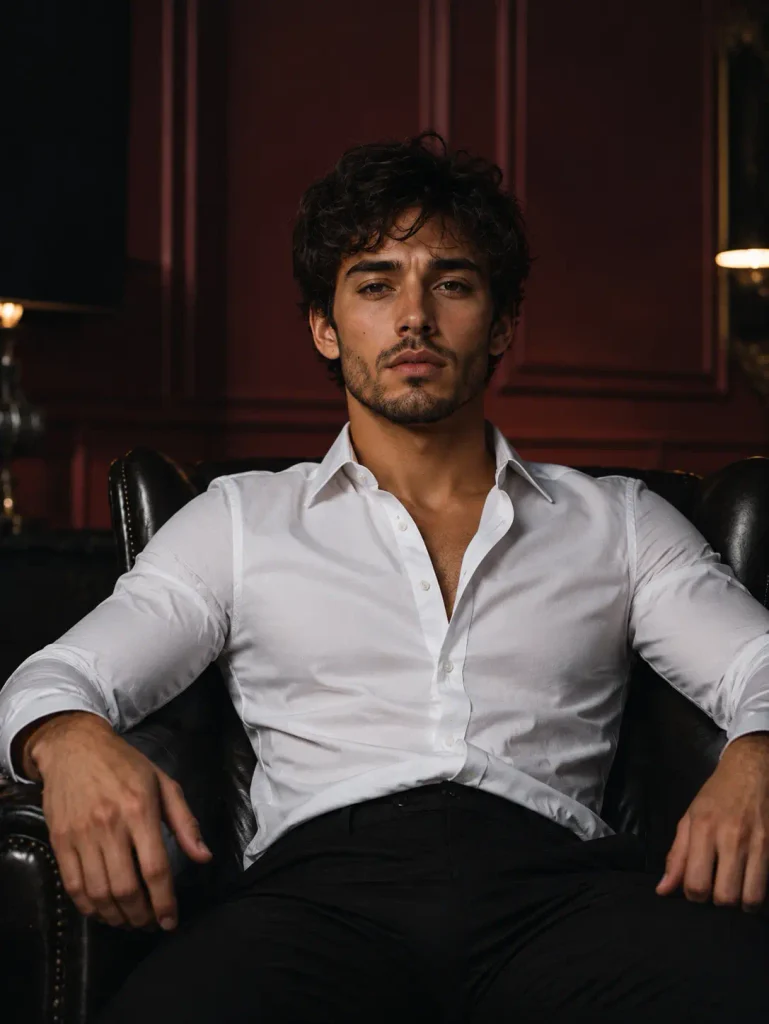
Create an ultra-realistic cinematic medium-close portrait of a stylish young man seated confidently in a dark luxury chair, positioned at the center of a dramatic modern room with deep rose-red walls. The composition should focus strongly on the man from approximately the waist/chest upward, while still showing enough of the room to establish the cinematic atmosphere.

The man has thick, naturally styled dark hair, sharp masculine facial features, a defined jawline, neatly trimmed short beard, expressive dark eyes, natural skin texture, realistic pores, and a calm yet powerful serious expression. Do not use glasses or eyewear. His eyes should be clearly visible and naturally catch the cinematic lighting.

He is wearing a perfectly fitted premium white formal shirt, slightly open at the collar, paired with elegant black trousers. His posture is relaxed but confident, sitting naturally in the chair with his shoulders slightly back and his gaze directed straight toward the camera.

The environment features rich rose-red / burgundy walls with subtle architectural paneling, fading into deep black shadows around the edges. Keep the background slightly soft and atmospheric so the man remains the primary visual focus.

Use a dramatic cinematic camera angle, slightly below eye level with a subtle perspective that gives the subject a powerful presence. Create a sophisticated Hollywood-style cinematic portrait, with controlled depth of field, realistic lens compression, soft background separation, and subtle filmic atmosphere.

Lighting should be moody and directional, with a soft key light illuminating one side of his face, gentle shadow falloff across the other side, a subtle warm rim light separating his hair and shoulders from the dark background, and soft highlights on the white shirt. Add realistic catchlights in the eyes and natural skin reflections.

The overall visual style should feel like a high-end fashion editorial mixed with a dramatic movie still — mysterious, elegant, masculine, luxurious, and sophisticated.

Photorealistic skin, authentic facial anatomy, realistic hair strands, natural facial proportions, cinematic color grading, deep blacks, rich burgundy tones, subtle film grain, volumetric atmosphere, realistic shadows, shallow depth of field, professional cinema camera look, 85mm portrait lens, f/1.8, high dynamic range, ultra-detailed, 8K quality, photorealistic.

Negative prompt: glasses, sunglasses, eyewear, distorted face, artificial skin, plastic skin, excessive retouching, extra people, duplicate body parts, deformed hands, unrealistic anatomy, oversaturated colors, blurry face, cartoon, illustration, CGI look, text, logo, watermark.
Luxury Rose Red Room Male AI Image Prompt Ultra Realistic Cinematic Portrait
A sophisticated interior, a sharply dressed man, and a rich rose-red backdrop can turn a simple AI portrait into something that feels straight out of a luxury fashion campaign. This concept combines elegant styling with a dramatic room setting, making it especially appealing for creators who want a polished male portrait without relying on an overly complicated scene. The strong contrast between the red interior and the subject’s refined outfit gives the final image an instantly recognizable visual identity.
The Atmosphere Behind the Look
The visual direction leans toward contemporary cinematic fashion photography rather than a conventional studio portrait. Deep rose-red or burgundy walls establish a warm, luxurious environment, while darker furniture and shadows prevent the color from becoming too bright or theatrical. The overall mood feels confident, sophisticated, and slightly mysterious.
The male subject acts as the visual anchor, dressed in a clean white shirt with black trousers. That simple combination works particularly well against the saturated surroundings. Instead of competing with the background, the clothing creates a crisp separation that keeps attention on the person.
What Makes the Image Feel Cinematic
One important choice is the medium-long framing. Keeping the camera far enough away to show the man from the head down toward the knees gives the portrait breathing room and allows the interior design to contribute to the story. It avoids the cramped feeling that can happen when AI portraits are generated too close to the face.
The lighting also plays a major role. A controlled, directional light on the subject can reveal facial structure and clothing texture while allowing portions of the room to fall into shadow. This produces the dramatic contrast associated with high-end editorial photography.
The rose-red walls provide the dominant color foundation, while black furniture, trousers, and subtle shadows introduce depth. The result is visually rich without needing multiple distracting colors.
Easy Ways to Personalize the Scene
There are several interesting directions you can take while keeping the same overall concept. Try replacing the simple chair with a large vintage leather lounge chair for a more classic luxury aesthetic. Alternatively, add a subtle marble side table and a small architectural lamp to make the room feel like an upscale private lounge.
You can also experiment with the subject’s styling. A partially unbuttoned white shirt creates a relaxed editorial appearance, while a fully buttoned shirt gives the portrait a cleaner, more formal fashion-campaign feel. For a stronger cinematic character, a slightly serious expression works particularly well with the dark surroundings.
Where This Portrait Works Best
This style is well suited to AI art websites, male fashion inspiration posts, social media profile visuals, luxury lifestyle content, and cinematic portrait collections. It can also work nicely as a featured image for an article about men’s fashion, interior aesthetics, or AI-generated photography.
My Experience Testing It
I tested this concept with chatgpt, and I found that a medium-long camera description produced a much better result than asking for a close portrait. One small adjustment that helped was emphasizing the room around the subject rather than repeatedly describing his face. I also noticed that excessive “red” wording sometimes made the walls look unnaturally bright, so keeping the color description closer to deep rose or burgundy gave a more believable luxury interior.