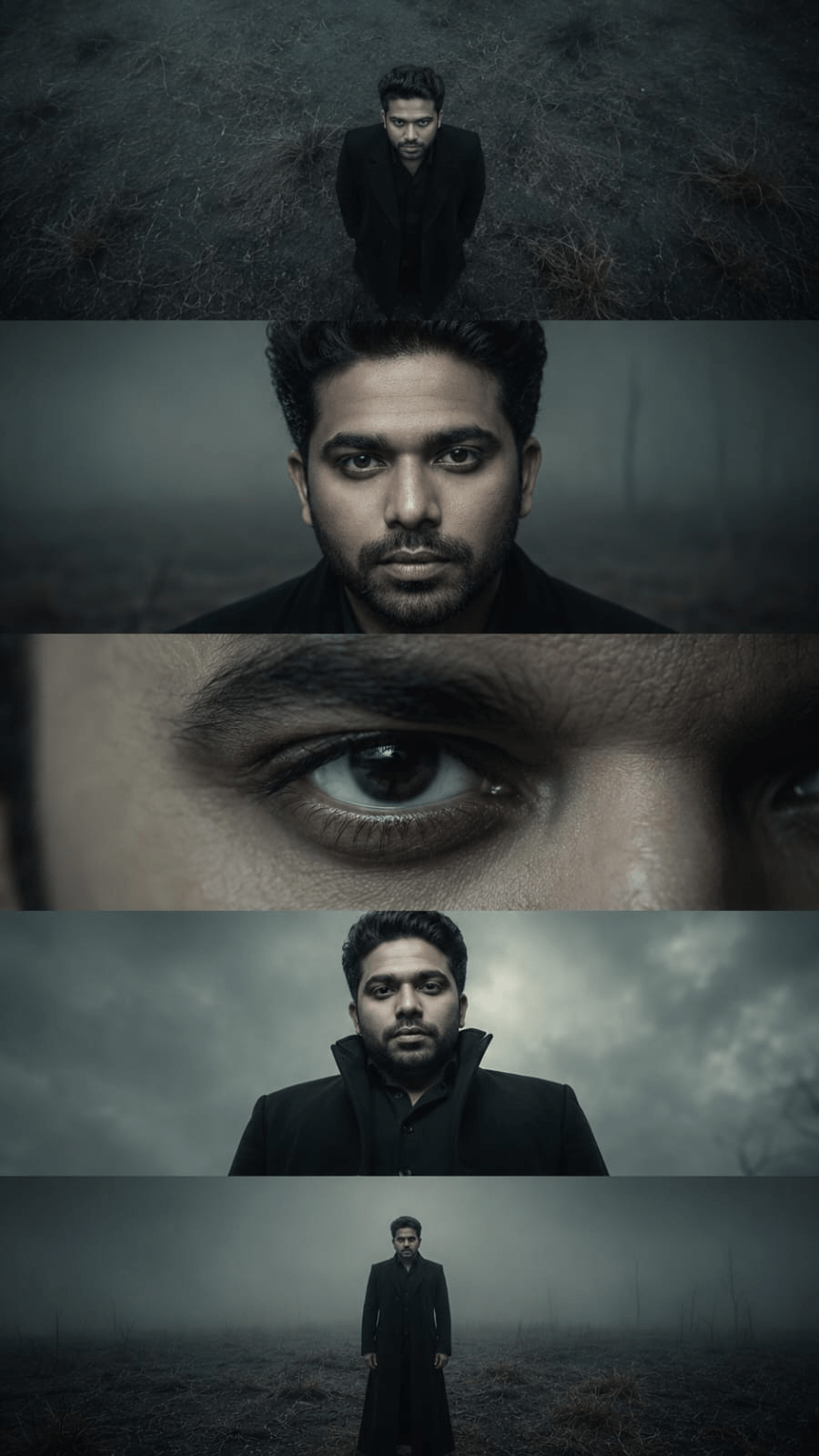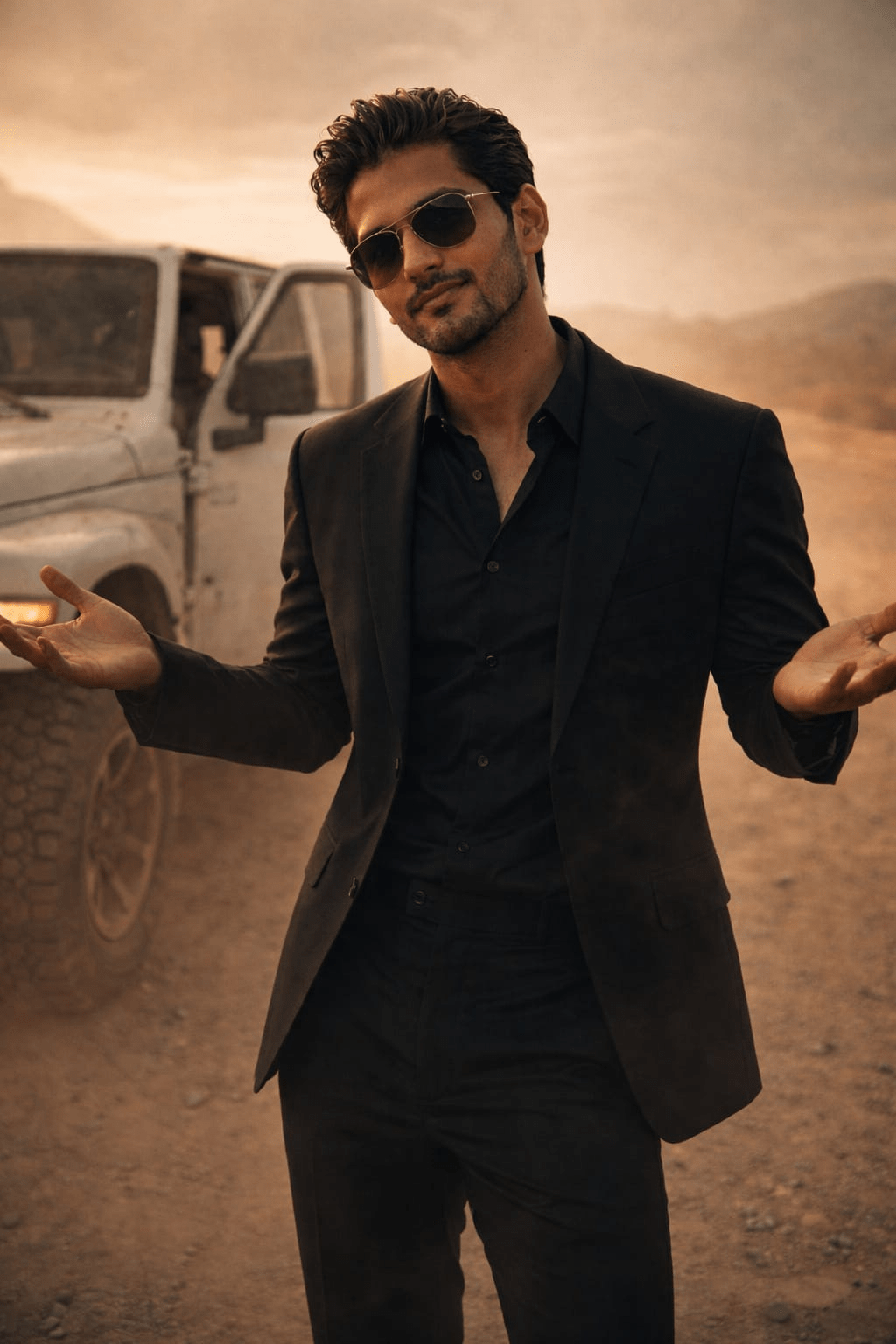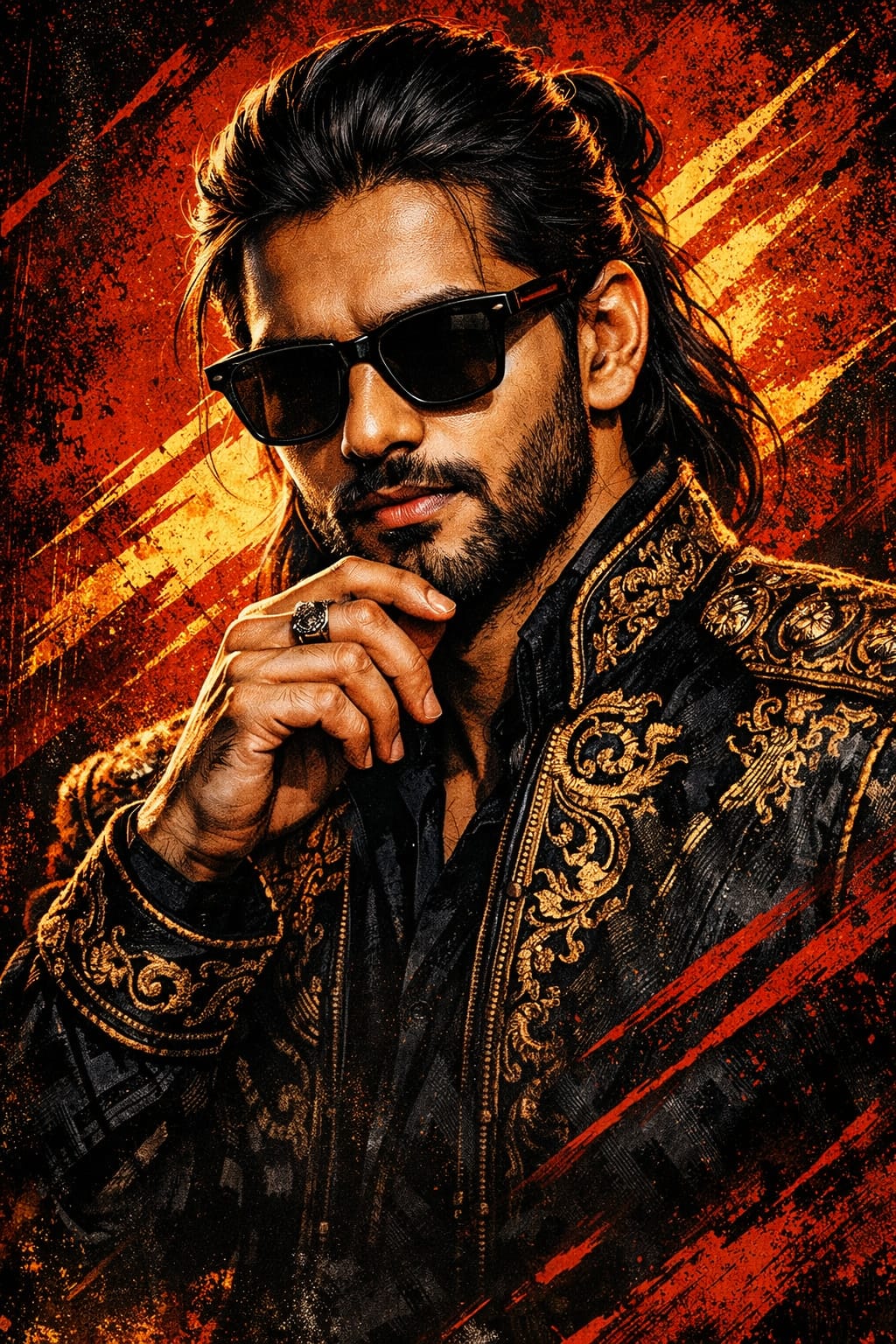
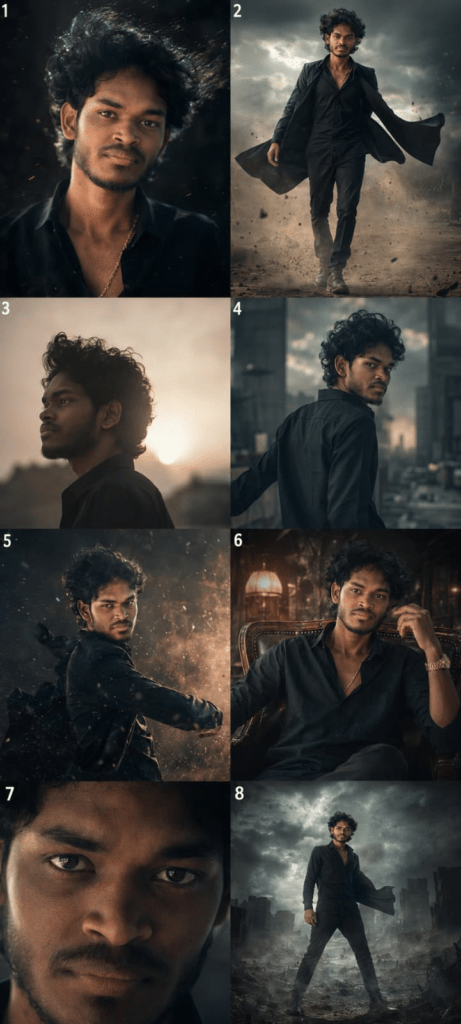
Ultra-realistic cinematic storyboard sequence / multi-shot character montage featuring the exact same young South Asian male face identity preserved consistently across every frame, hyper-realistic skin texture, natural pores, realistic expressive eyes, premium hair detailing, strong face consistency. Premium Hollywood / Netflix cinematic quality, photorealistic, dramatic atmospheric storytelling.
Shot 1: Hero standing still, intense direct eye contact, slow wind moving hair and outfit, confident expression, dramatic close-up portrait, shallow depth of field, cinematic lighting.
Shot 2: Walking toward camera with powerful attitude, coat/fabric moving dynamically in wind, low-angle cinematic shot, intense action energy, realistic motion blur.
Shot 3: Side profile looking into distance, thoughtful mysterious expression, dramatic rim lighting, atmospheric haze, premium editorial composition.
Shot 4: Looking back over shoulder while walking away, emotional cinematic storytelling pose, moody lighting, realistic environmental depth.
Shot 5: Mid-action movement pose, turning sharply, dynamic body motion, fascinating cinematic movement, flying dust particles, dramatic shadows.
Shot 6: Sitting in stylish confident pose, luxury fashion editorial look, powerful expression, cinematic framing.
Shot 7: Extreme close-up on eyes and face, emotional intense expression, hyper-detailed realism, dramatic shadows.
Shot 8: Full-body hero pose in epic environment, commanding cinematic composition, atmospheric fog, volumetric lighting, blockbuster movie poster aesthetic.
Visual style: ultra photorealistic, IMAX cinematic quality, dramatic lighting, atmospheric fog, floating particles, volumetric light rays, realistic motion physics, premium color grading, masterpiece composition, highly detailed, 8K realism.
Optional background themes: dystopian city / desert storm / dark noir city / futuristic sci-fi / luxury mansion / crime thriller atmosphere.
About This AI Image Prompt
This prompt is designed to create an eight-shot cinematic character montage that feels like a collection of carefully planned scenes from a feature film. Instead of generating one isolated portrait, it establishes the same young South Asian male character across different poses, camera perspectives, movements, and emotional moments. The central creative challenge is maintaining a recognizable identity while allowing the visual storytelling to change from frame to frame.
Each shot has a distinct purpose. The opening frame establishes the character through direct eye contact, while the walking sequence introduces movement and attitude. The profile shot adds mystery, the over-the-shoulder moment introduces emotional distance, and the action frame increases energy. Later shots transition into confident fashion imagery, an intense facial close-up, and finally a full-body hero composition.
The prompt therefore works like a miniature visual storyboard. Atmospheric details such as fog, dust, wind, particles, and cinematic lighting help connect the individual shots into one cohesive fictional world.
Understanding the Visual Style
The visual language combines Hollywood-style cinematic photography, character storytelling, fashion editorial imagery, and movie-poster composition. The sequence moves between intimate close-ups and expansive hero shots, creating the visual rhythm normally associated with film trailers and character introductions.
Photorealism is emphasized throughout, with realistic skin, eyes, hair, motion, and environmental depth. Dramatic lighting and atmospheric haze add cinematic scale, while premium color grading helps unify scenes that may otherwise have very different compositions.
The optional environments allow the same character framework to be adapted to dystopian, noir, futuristic, luxury, desert, or crime-thriller stories without changing the underlying montage structure.
Technical Prompt Breakdown
The most important technical instruction is consistent facial identity across every frame. This tells the image-generation system that the character should remain visually recognizable while the pose and framing change. For multi-shot storytelling, identity consistency is often more important than using identical compositions.
The prompt also specifies different shot types, including close-up, low-angle, side profile, over-the-shoulder, mid-action, extreme close-up, and full-body framing. Each perspective changes how the viewer relates to the character.
Several shots explicitly use shallow depth of field, motion blur, rim lighting, atmospheric haze, and environmental depth. These instructions help distinguish foreground subjects from their surroundings and communicate movement or mood.
The prompt does not specify a camera model, lens, aperture, ISO, shutter speed, or focal length. Therefore, those details should not be added when adapting it.
Lighting, Colors & Composition
Lighting changes according to the storytelling purpose of each frame. Direct cinematic lighting establishes the hero, rim lighting emphasizes the side profile, dramatic shadows intensify the close-up, and volumetric light rays add scale to the final environment.
The composition deliberately varies throughout the sequence. Close-ups bring attention to facial emotion, low-angle framing makes the walking character appear powerful, and full-body framing places him within a larger world.
Fog, dust particles, wind, and atmospheric haze provide visual continuity between the shots. They also create depth by placing additional layers between the character and background.
Because no fixed color palette is specified, the final colors can be adapted to the selected environment. A noir setting could favor darker tones, while a futuristic environment could support cooler illumination and stronger atmospheric contrast.
How to Customize This Prompt
Choose One Visual World
Select a single environment for all eight shots, such as a dystopian city, desert storm, noir street, futuristic city, luxury mansion, or crime-thriller setting. Keeping the world consistent can make the montage feel like scenes from the same film.
Change the Character Styling
Replace the coat and fashion styling with a formal suit, tactical outfit, futuristic clothing, casual streetwear, or historical costume. The wardrobe can immediately communicate the character’s fictional role.
Adjust the Emotional Arc
Make the first shots confident, transition into uncertainty or reflection, then finish with determination. Changing expressions across the sequence can make the montage feel more narrative-driven.
Modify the Action
Replace walking and turning movements with running, entering a vehicle, standing in rain, opening a door, or preparing for a confrontation. Choose movements that support the selected story.
Rearrange the Shot Order
You can reorder the eight frames to create a different rhythm. Beginning with the extreme close-up creates mystery, while beginning with the full-body hero frame establishes the character and environment immediately.
Best Use Cases
This montage format is useful for AI movie concepts, character introductions, storyboard development, cinematic portfolios, social media reels, promotional artwork, fictional trailers, visual storytelling, and mood boards. It can also help creators explore how one character might appear across multiple scenes before developing a larger project. For commercial work, verify the AI generator’s licensing terms and any rights associated with third-party references or assets.