Copy & use anywhere
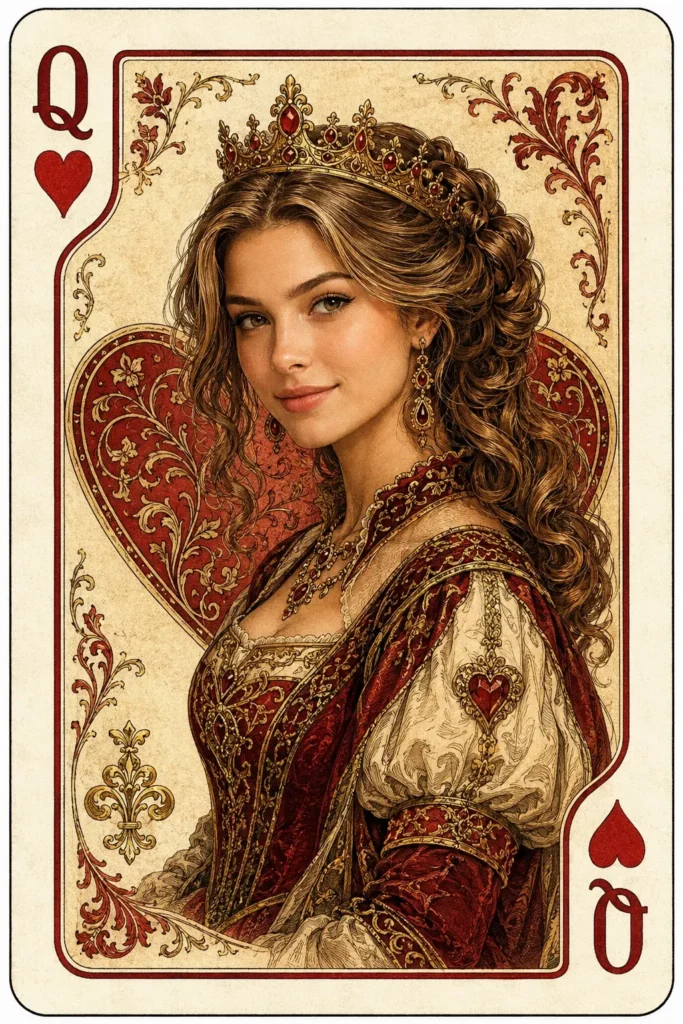
Use the uploaded reference photo as the identity reference for the person. Transform the person into an elegant Queen of Hearts vintage playing-card portrait, while preserving their recognizable facial identity, facial structure, eyes, nose, lips, skin tone, hairstyle characteristics, and overall likeness.

Create a highly detailed traditional vintage European playing-card illustration. The uploaded person must become the Queen, keeping their recognizable face and natural facial proportions.

Show the Queen from approximately the chest upward in an elegant three-quarter side profile facing left. Give her a sophisticated royal appearance with an elaborate curled hairstyle, an ornate gold crown with traditional red and gold decoration, elegant gold earrings, and a luxurious Renaissance-inspired royal dress.

Use a classic palette of deep red, burgundy, cream, ivory, muted gold, brown, and black.

The artwork should look like a genuine antique illustrated playing card, with fine hand-drawn ink outlines, delicate engraving details, subtle cross-hatching, elegant shading, ornamental linework, slightly aged paper texture, and traditional printed-card craftsmanship.

Playing Card Layout

Create a clean vertical Queen of Hearts playing card with:

White outer card background
Thin rounded black outer border
Inner rounded rectangular frame with a traditional dark-red border
Large Q ♥ in the upper-left corner
Matching ♥ Q in the lower-right corner, rotated upside down
Traditional vintage decorative flourishes
Classic antique-gold ornamental details
Elegant red and gold decoration around the Queen
Balanced, symmetrical playing-card composition
Cream/parchment-colored illustration background

Keep the design simple, elegant, traditional, and historically inspired.

Identity Preservation

The uploaded person's face is the most important element. Preserve their recognizable facial identity, face shape, eyes, eyebrows, nose, lips, jawline, skin tone, and distinctive facial characteristics. Do not turn them into a generic queen or replace their face with another person's face.

The clothing, hairstyle, crown, and illustration style should be adapted around the person's identity.

STRICT NEGATIVE PROMPT

No stars, no AI symbols, no AI logos, no futuristic symbols, no technology elements, no robots, no circuits, no glowing effects, no neon effects, no modern graphic elements, no random icons, no emojis, no fantasy symbols, no celestial symbols, no extra letters, no extra numbers, no extra characters, no watermark, no stock-photo watermark, no website text, no photographer credit, no signature, no modern typography, no unrelated decorations.

The final image should look like a premium authentic vintage Queen of Hearts playing card featuring the uploaded person, not an AI-themed design.

Aspect ratio: 2:3 vertical.

Style: traditional European playing-card illustration, antique engraving, hand-drawn ink, Renaissance portrait, vintage printed card, highly detailed, elegant, clean, premium.
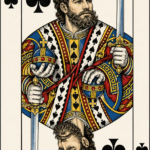
Queen of Hearts AI Prompt: Vintage Playing Card Portrait
There is something instantly recognizable about a classic Queen of Hearts card, from the ornate borders to the dramatic red-and-black palette. This AI image prompt takes that familiar playing-card aesthetic and turns a person’s portrait into a regal vintage character while keeping their recognizable facial features. It is a fun choice for creators who want something more distinctive than a standard AI portrait, especially for profile artwork, social media visuals, themed projects, or creative experiments.
A Regal Vintage Card Look
The visual direction draws from traditional European playing-card illustrations rather than modern digital fantasy art. The portrait has an elegant, slightly theatrical quality, with decorative details that make it feel like it belongs to an old card deck.
Deep crimson, black, ivory, and muted gold work particularly well for the Queen of Hearts theme. The aged-card appearance adds warmth and character, while fine linework around the clothing, hair, ornaments, and border helps sell the illusion of a genuinely illustrated playing card.
The mood is confident and sophisticated rather than frightening. Think aristocratic portraiture mixed with the visual language of a beautifully preserved antique game card.
Details That Make the Portrait Work
One important creative choice is the front-facing portrait angle. Keeping the face clearly visible gives the AI enough visual information to preserve recognizable features while still allowing the surrounding artwork to become stylized.
Another useful element is the ornamental framing. Traditional card borders, decorative corners, and small heart motifs provide structure around the portrait without competing too heavily with the face. These details are what make the result feel like a designed playing card instead of an ordinary fantasy portrait.
The limited color palette also matters. Strong reds combined with dark tones and aged cream create the unmistakable Queen of Hearts identity. Excessively bright modern colors can make the artwork look more like a generic AI fantasy poster.
Make Your Queen of Hearts Unique
There are several ways to personalize the result without losing the classic card identity.
- Change the royal styling: Try a velvet gown, jeweled collar, embroidered sleeves, or an elaborate historical hairstyle to give the character a different personality.
- Create a special card edition: Add subtle floral engraving, Victorian ornamentation, or slightly weathered paper texture for an older collector-card appearance.
- Build a character series: Once the Queen of Hearts works, use the same visual direction for a King, Jack, or other custom playing-card characters. Keeping the border treatment consistent can make the images look like parts of one complete deck.
A useful trick is to keep the decorative elements slightly less detailed around the face. When every part of the image receives equal visual complexity, the portrait can lose its strongest focal point.
Where This Style Fits Best
This Queen of Hearts portrait works especially well for Pinterest graphics, Instagram profile artwork, fantasy character concepts, personalized gifts, themed party invitations, and AI art collections. It can also be a strong visual starting point for creators building a complete vintage playing-card series around different people or fictional characters.
My Experience Testing the Prompt
I tested this style with a portrait reference and found that ChatGPT image generation handled the overall card-art transformation particularly well when the reference face was clear and evenly lit. One small improvement was reducing unnecessary facial accessories in the description; otherwise, the model sometimes added jewelry across the cheeks or forehead. I also found that keeping the vintage card border slightly thinner helped the person’s face remain the main attraction.
The best results come from starting with a reasonably sharp portrait where the eyes, nose, lips, and overall face shape are easy to see. Once the identity is established, the vintage illustration style can add the royal personality without completely losing the person underneath it.
If you enjoy experimenting with recognizable portraits and historical art styles, this Queen of Hearts concept is a great one to keep in your creative toolkit. It combines the familiarity of a classic playing card with the flexibility of modern AI image generation, giving you plenty of room to create a portrait that feels both personal and timeless.